A Complete Guide to Custom Jacket Manufacturing for Emerging Fashion Brands
Launching a fashion brand is exhilarating. You have the vision, the designs, and the audience in mind. But when it comes to outerwear—arguably the most technically demanding category in apparel—many emerging brands hit a wall. Jackets are not t-shirts. They require precise construction, layered materials, specialized hardware, and a manufacturing partner who understands the difference between fast fashion and premium streetwear quality. This guide walks you through every stage of custom jacket manufacturing, from fabric selection to final quality control, so you can bring your outerwear collection to market with confidence. The global outerwear market has been expanding steadily, with custom and branded jackets accounting for an increasingly significant share. According to industry analysis from the Textile Exchange, the premium apparel segment—including custom jackets and outerwear—has seen consistent year-over-year growth as consumers shift toward distinctive, brand-driven pieces rather than generic mass-market alternatives. For emerging fashion brands, this represents a substantial opportunity. A well-designed custom jacket can serve as a collection centerpiece, commanding higher retail prices and building stronger brand recognition than basic tops or bottoms. Streetwear brands in particular have leveraged custom jackets—bombers, varsity styles, workwear-inspired pieces, and technical shells—to differentiate themselves in a crowded market. The key lies not just in design creativity, but in the manufacturing partnership that transforms those designs into garments that customers will wear and recommend. Not all jackets are created equal in the manufacturing process. Each style demands specific expertise, machinery, and material handling. Understanding these differences helps you select the right manufacturer from the start. Characterized by ribbed cuffs, collar, and hem, bomber jackets require precise rib-knit attachment and often feature nylon or polyester shell fabrics. The zipper installation and lining attachment are critical quality points. A poorly attached rib collar can ruin the entire silhouette. Denim jackets demand specialized washing equipment for achieving the right shade, whiskering, and distressing effects. The double-stitched seams, riveted buttons, and heavy-weight fabric handling separate experienced denim manufacturers from generalists. These require expertise in combining melton wool bodies with contrasting leather or faux-leather sleeves. Chenille patch application, snap-button installation, and quilted lining integration are specialized skills that not every factory possesses. Down-filled or synthetic-insulated jackets require baffle construction to keep fill material evenly distributed. The quality of the quilting stitch, the fill power of the insulation, and the shell fabric's down-proof rating all determine whether the finished jacket performs as intended or leaks filling after minimal wear. These demand seam-sealing equipment, waterproof zippers, and expertise in bonding technologies. They sit at the high end of manufacturing complexity and require factories with specialized outdoor or performance-wear experience. Working with the wrong manufacturer can derail a launch and drain a startup budget. After over 20 years in custom apparel manufacturing, we have seen the same costly mistakes repeated by emerging brands. Here are the pitfalls to avoid: Other common issues include miscommunication about sizing specifications, inconsistent color matching across production batches, and substandard hardware (zippers, snaps, buttons) that fails after minimal use. The root cause is almost always the same: choosing a manufacturer based on the lowest quoted price rather than verifiable expertise in jacket construction. Fabric selection is where many first-time brand owners make costly errors. The right material elevates a design; the wrong one results in returns, complaints, and brand damage. Here is a practical framework for jacket fabric selection: For emerging brands aiming for premium positioning, prioritize fabrics with certification credentials. At Chanjoye, a leading high-end custom streetwear manufacturer with over 20 years of experience serving premium and luxury streetwear brands worldwide, fabric sourcing begins with OEKO-TEX Standard 100 certified mills to ensure every material meets international safety standards. This level of sourcing discipline is what separates premium outerwear from mass-market alternatives. The difference between a jacket that looks expensive and one that looks generic often comes down to construction details that most consumers never consciously notice—but instinctively feel. Here are the techniques that signal premium manufacturing: Instead of basic overlock stitching, premium jackets use French seams on lightweight shells and bound seams on heavier fabrics. These prevent fraying and create a clean interior finish that communicates quality the moment a customer looks inside the garment. High-stress points—pocket corners, zipper ends, belt loops—should feature bartack stitching with at least 28–42 stitches per reinforcement. This small detail dramatically extends jacket lifespan and prevents embarrassing seam failures. For plaid, striped, or printed fabrics, pattern alignment at center-back seams, pocket flaps, and collar points is a hallmark of careful manufacturing. Factories that skip this step produce visibly misaligned garments that read as low-quality to consumers. The collar, lapel, and placket areas require interfacing to maintain structure. Premium manufacturers select the correct interfacing weight and type—woven, non-woven, or knit fusible—for each specific fabric combination rather than using a one-size-fits-all approach. When evaluating potential manufacturing partners, ask specifically about their approach to these four construction elements. The quality of their answer—or lack thereof—will tell you everything about the factory's standards. Brands that work with experienced partners like Chanjoye benefit from meticulous craftsmanship honed over two decades of producing streetwear jackets for demanding global brands. Minimum Order Quantity (MOQ) is often the biggest barrier for emerging brands. Many large factories set jacket MOQs at 300–500 pieces per style, which is prohibitive for brands testing new designs or launching with limited capital. However, the manufacturing landscape has evolved to accommodate smaller brands. The key is finding a manufacturer that offers flexible MOQ without compromising on quality. Some premium manufacturers, Chanjoye included, offer starting MOQs as low as 50–100 pieces per style—designed specifically for quality-focused emerging brands that need to test the market before scaling. This is not a budget offering; it is a service model built on the understanding that premium brands need to validate designs with real customers before committing to larger volumes. When discussing pricing with a manufacturer, understand that jacket pricing is driven by several factors beyond just materials: Understanding the production timeline helps emerging brands plan launches, marketing campaigns, and cash flow. Here is the standard workflow from concept to delivery: Provide your manufacturer with detailed design sketches, measurement specs, fabric references, and trim details. The more complete your tech pack, the more accurate the initial quote and timeline will be. Browse our product categories for reference specifications. The manufacturer sources materials based on your specifications. At this stage, lab dips for custom colors and trim samples are approved. Expect 7–14 days for standard fabrics and 15–25 days for custom-developed materials. CAD pattern makers create digital patterns from your specifications and grade them across your size range. This is invisible to the customer but critical to how the jacket fits across sizes S–2XL. A single sample jacket is produced using your actual fabrics and trims. This is your last chance to adjust fit, feel, and details before bulk production. Never skip this step. Once the PPS is approved, production begins. Typical lead times are 25–45 days depending on style complexity and order volume. Inline QC checks occur at 20%, 50%, and 80% completion milestones. AQL-based final random inspection audits the finished goods. Approved orders are packed, labeled, and shipped via your chosen logistics method. International brands should budget 7–25 days for freight depending on the shipping option selected. Quality control in jacket manufacturing is not a nice-to-have—it is the difference between a brand that grows through referrals and one that drowns in returns. Here are the non-negotiable QC standards you should require from any jacket manufacturer: Acceptable Quality Level (AQL) 2.5 means that in a random sample of 125 pieces from a 1,200-piece order, no more than 7 defective units are allowed. This is the industry standard for premium apparel. Insist on AQL 2.5 as the maximum tolerance. Request test reports for colorfastness to washing (AATCC 61), colorfastness to crocking/rubbing (ISO 105-X12), pilling resistance (ISO 12945-2), and seam slippage (ISO 13936-2). These standardized tests provide objective quality data rather than subjective opinions. Establish a clear tolerance table before production. For jackets, chest measurements typically allow ±1 cm tolerance, while sleeve length may allow ±1.5 cm. Critical points like collar width and zipper length should have ±0.5 cm tolerance. Reputable manufacturers will provide QC documentation proactively. At Chanjoye, every production run includes inline inspection reports at three production stages, plus a final AQL 2.5 audit before packing. This commitment to quality has sustained partnerships with premium streetwear brands for over two decades. For a deeper look at our quality standards, visit our About Us page. Sustainability is no longer a trend—it is a baseline expectation for premium fashion brands targeting consumers under 40. According to data from the OEKO-TEX Association and Global Organic Textile Standard (GOTS), certified organic and eco-friendly textile production has grown substantially, driven by both regulatory pressure and consumer demand. For emerging jacket brands, these certifications matter in practical ways: Choosing a manufacturer with verifiable certifications allows your brand to make sustainability claims with confidence, backed by third-party verification rather than vague marketing language. This is increasingly important as regulators in the EU and US crack down on greenwashing claims. The transition from producing 50 sample jackets to manufacturing 500 or 5,000 units requires a different operational mindset. Here is how to scale without sacrificing quality: Start with a focused range—perhaps 2–3 jacket styles in 3–4 sizes each. Use this phase to test fabric preferences, fit feedback, and price sensitivity with real customers. Low-MOQ manufacturing partners like Chanjoye make this phase accessible without requiring massive upfront investment. Based on sell-through data from Phase 1, drop underperforming styles and double down on winners. Introduce color variations of proven designs. At this volume, negotiate better fabric pricing and consider custom-branded hardware (zipper pulls, buttons). Explore our blog section for more guidance on scaling strategies. At this volume, you can negotiate tiered pricing that significantly improves margins. Consider dedicated production lines, custom fabric development, and advanced embellishment techniques. The relationship with your manufacturer should now be a strategic partnership rather than a transactional one. If you are ready to discuss scaling your jacket production, reach out to our team for a detailed consultation. Custom jacket manufacturing is a partnership, not a transaction. The brands that succeed are those that invest time in finding a manufacturer whose expertise, quality standards, and production philosophy align with their brand vision. With the right partner, emerging fashion brands can produce outerwear that competes with established labels on quality while maintaining the creative edge that makes them distinctive. To start your custom jacket project with an experienced manufacturing partner, send us an inquiry today.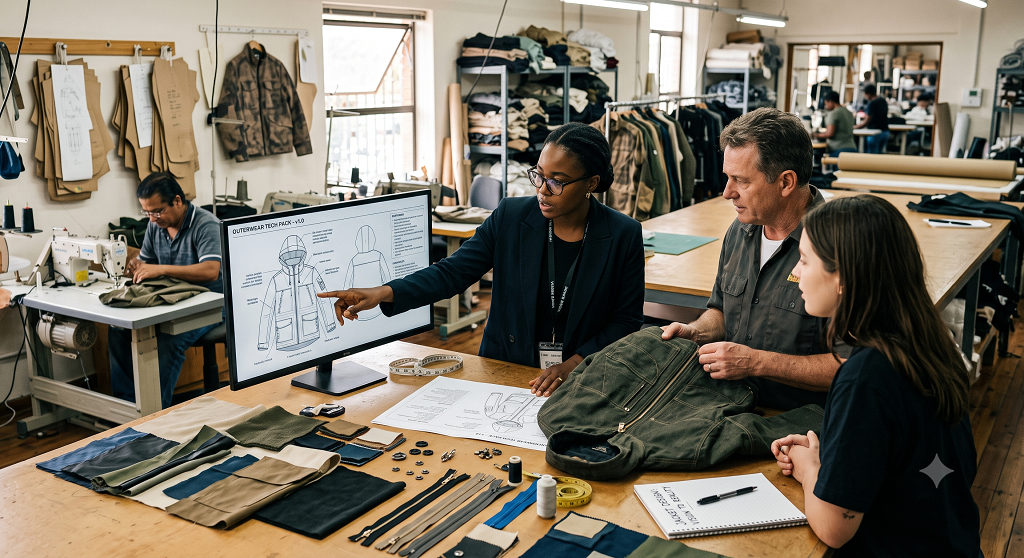
The Growing Demand for Custom Jackets in Fashion
Understanding Jacket Types and Their Manufacturing Requirements
Bomber Jackets
Denim Jackets
Varsity and Letterman Jackets
Puffer and Quilted Jackets
Technical and Softshell Jackets
Common Jacket Manufacturing Pitfalls That Cost Emerging Brands
How to Select the Right Fabrics for Your Jacket Collection
Fabric Type Best For Key Properties Typical GSM Range Nylon (ripstop) Bombers, windbreakers, shells Lightweight, wind-resistant, durable 60–120 GSM Polyester (twill) Varsity, work jackets, coaches jackets Versatile, dye-sublimation friendly, wrinkle-resistant 130–260 GSM Cotton canvas/duck Work jackets, chore coats, utility jackets Heavyweight, breathable, ages well 260–400 GSM Denim Trucker jackets, denim outerwear Structured, wash-friendly, high perceived value 340–470 GSM (10–14 oz) Melton wool blend Varsity jackets, peacoats Warm, structured, premium finish 400–600 GSM Faux leather / PU Moto jackets, accent panels Vegan-friendly, high visual impact, lower cost than genuine 300–500 GSM Fleece (polar/coral) Lining, sherpa jackets, standalone fleece jackets Soft, warm, affordable layering 180–350 GSM Construction Techniques That Define Premium Quality
French Seams and Bound Seams
Bartack Reinforcement
Pattern Matching at Seams
Proper Interfacing Selection
Navigating MOQ and Pricing for First-Time Buyers
Working with a Custom Jacket Manufacturer: The Complete Process
Design Brief and Tech Pack Submission
Fabric and Trim Sourcing
Pattern Making and Grading
Pre-Production Sample (PPS)
Bulk Production
Final Inspection and Shipping
Quality Control Standards Every Brand Should Demand
AQL 2.5 or Better Sampling
Fabric Performance Testing
Measurement Tolerance Chart
Sustainable and Certified Manufacturing Options
Scaling Your Jacket Line from Samples to Production
Phase 1: Market Validation (50–200 units)
Phase 2: Style Refinement (200–800 units)
Phase 3: Full Collection Scale (800–5,000+ units)
Key Takeaway