Custom Apparel Production Timeline: From Sample Approval to Global Delivery
Introduction:
For an independent streetwear brand, launching on time can determine whether a product drop succeeds. A strong design is not enough if the collection misses the selling season, holiday period, advertising schedule, or social media campaign window. Custom apparel production is not one simple step. It is a complete timeline that includes information preparation, quotation, sampling, revision, pre-production approval, bulk manufacturing, quality control, packing, and logistics.
The more prepared a brand is before requesting a quote, the more controllable the production timeline becomes. A manufacturer needs more than a logo or reference image. It needs product category, estimated quantity, size range, fabric preference, colors, artwork files, embroidery or print requirements, trim details, packaging method, and target delivery date. If this information is incomplete, quotation and scheduling must be revised repeatedly, and sampling may move in the wrong direction.
Reliable timeline management depends on sample approval, pre-production samples, in-line inspection, final quality control, packing, and delivery coordination. Each stage reduces risk. Sample approval confirms the design direction. A pre-production sample fixes the bulk standard. In-line inspection catches problems early. Final quality control protects shipment quality. Clear packing and logistics planning help the goods arrive correctly and on time.
Chapter 1:Common Production Stages
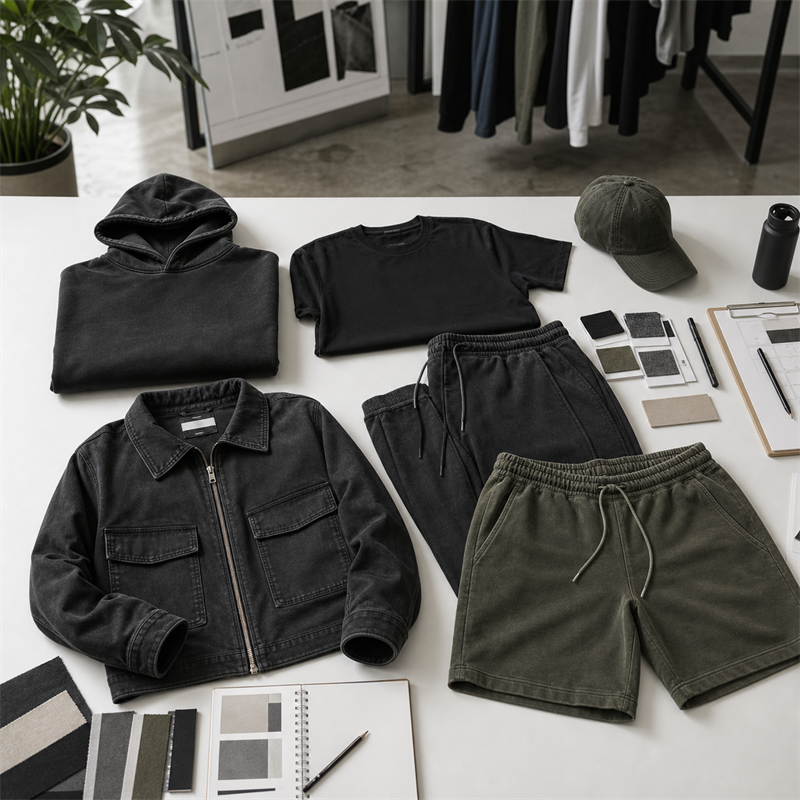
The first stage is requirement confirmation. The brand provides product type, design files, references, fabric direction, sizing, and estimated quantity. The second stage is quotation and production advice. The manufacturer evaluates cost based on fabric, technique, quantity, and timeline. The third stage is sampling. Samples are used to check fit, fabric, color, print placement, embroidery quality, and trims. The fourth stage is sample revision. If the brand needs changes to measurements, technique, or details, these must be confirmed before moving forward.
The fifth stage is pre-production sample approval. This sample becomes the standard for bulk production. The sixth stage is bulk manufacturing, including cutting, printing, embroidery, sewing, washing, ironing, and pre-packing preparation. The seventh stage is quality control. Inspection should cover measurements, stitching, color difference, stains, damage, print durability, trims, and packaging. The eighth stage is packing and logistics, based on destination, shipping method, and customer requirements.
Chapter 2:What Usually Causes Delays
Common causes of delay include incomplete information, fabric shortage, slow color confirmation, too many sample revisions, unclear artwork files, busy holiday production schedules, payment delay, and logistics uncertainty. Many delays are not caused by slow factory production. They happen because early-stage information requires too many rounds of confirmation.
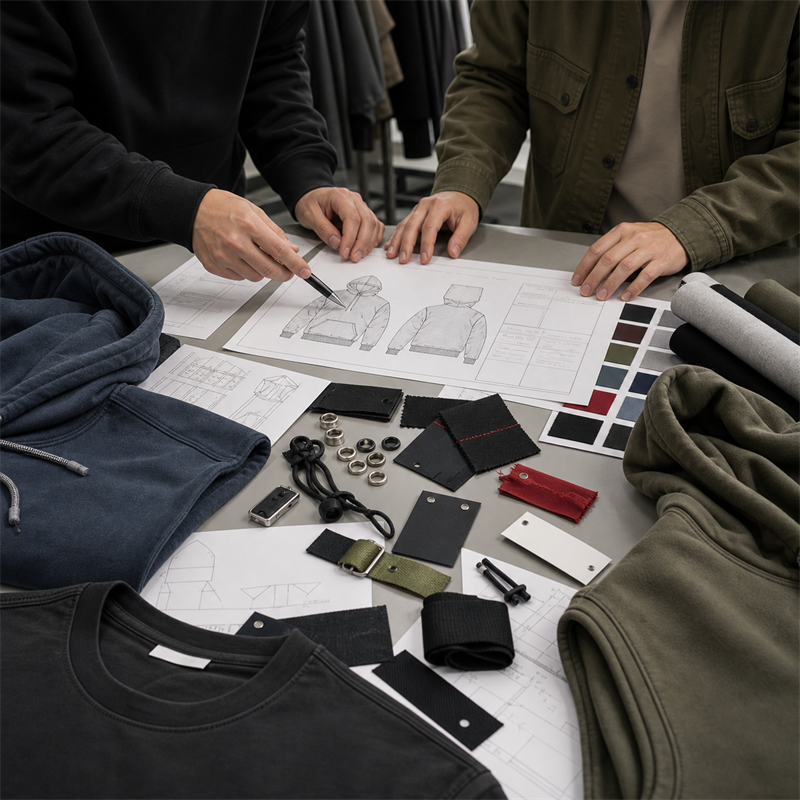
Brands can reduce delays through clearer communication. When requesting a quote, provide AI or PDF artwork, size specs, target fabric, color references, decoration placement, quantity, and expected delivery date. During sampling, collect feedback internally and send one clear revision list. After approving the pre-production sample, avoid frequent last-minute design changes. Every late change can affect fabric purchasing, cutting, printing, sewing, and production scheduling.
Chapter 3:How to Plan Backward from a Launch Date
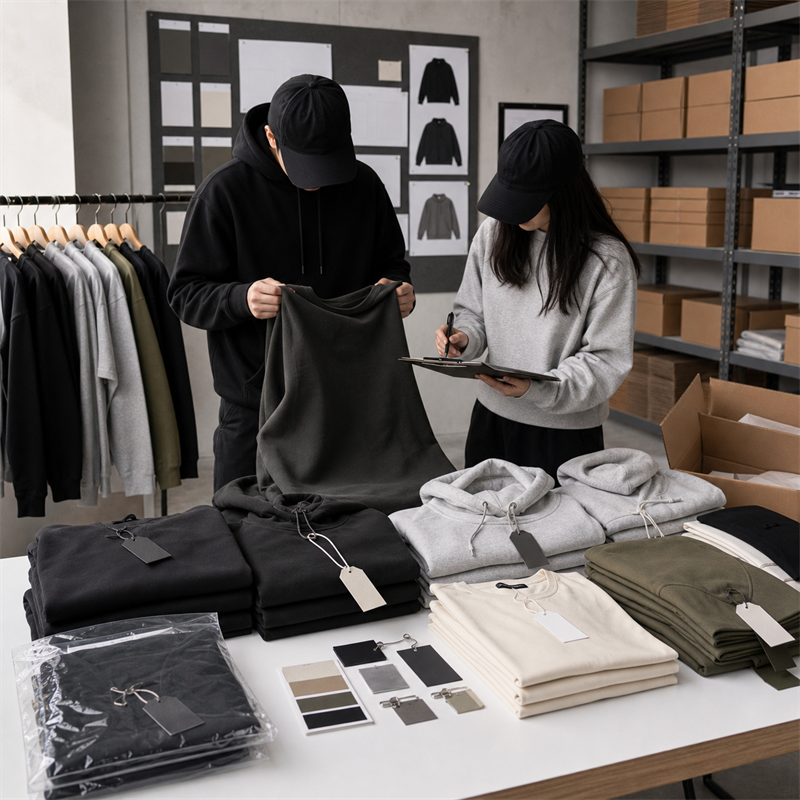
If a brand wants to launch on a specific date, production should not begin only one or two weeks before the launch. A better method is to plan backward. If you want to launch a fall collection on September 1, you also need time for photography, advertising assets, product pages, warehousing, and logistics. Samples should ideally be confirmed 8 to 12 weeks before launch. Bulk production may require 3 to 6 weeks, and international shipping may require 1 to 4 weeks depending on the method.
For a first order with a new manufacturer, brands should allow extra time because both sides need to align on communication, fit preference, fabric standards, and quality requirements. Repeat orders can move faster because tech packs, fabric choices, and production standards are already fixed.
Chapter 4:Why Quality Control Protects Delivery
Some brands focus only on speed and ignore inspection. In reality, fast delivery without quality control can create bigger losses. If bulk goods arrive with size errors, cracked prints, loose threads, color differences, stains, or wrong packaging, the brand may face returns, negative reviews, and customer loss. Quality control does not slow down delivery; it protects the result of delivery.
A strong manufacturer sets inspection points during production instead of waiting until the end. In-line inspection allows sewing and decoration issues to be corrected early. Final inspection ensures shipment consistency. For export orders, carton information, packing quantity, labels, and packaging requirements must also be accurate to support warehousing and delivery.
Quick Answer
A custom apparel production timeline usually includes preparation, quotation, sampling, sample revision, pre-production approval, bulk manufacturing, quality control, packing, and logistics. To launch on time, brands should prepare complete information early and allow enough time for sample revision, production scheduling, and international delivery.
FAQ
Q1: How long does custom apparel production take?
It depends on product complexity, quantity, fabric, and decoration. New projects should allow several weeks to several months for sampling, bulk production, and shipping.
Q2: Why is sample approval important?
Sample approval helps identify fit, fabric, color, and decoration issues before bulk production.
Q3: How can brands avoid production delays?
Prepare complete information early, send clear sample feedback, and avoid frequent design changes after pre-production approval.
📞 Phone: [86-15015158179]
📧 Email: [info@chanjoye.com]
🌐 WhatsApp:[https://wa.me/8618025298509]
Click the link above to start designing your custom streetwear today. We can’t wait to help you express your bold style!