Custom Streetwear Capsule Collection: How to Build a Profitable First Drop with a Manufacturing Partner
Introduction:
For a new streetwear brand, the first product launch should not be a random mix of many styles. A smarter approach is to build a focused custom streetwear capsule collection. A capsule collection usually includes a small group of coordinated products, such as hoodies, T-shirts, sweatpants, jackets, shorts, or caps. These pieces share the same fit direction, fabric story, color palette, decoration language, and brand attitude. This helps customers understand the brand immediately instead of seeing a collection that feels unfinished or disconnected.
A strong apparel manufacturer does more than produce garments. The right manufacturing partner helps translate brand identity into production-ready specifications. Many founders have sketches, reference images, social media inspiration boards, or logo files, but they may not have complete tech packs, size charts, fabric standards, decoration instructions, wash requirements, trim details, or packaging plans. An experienced custom streetwear manufacturer turns these creative inputs into clear documents that can be sampled, quoted, produced, inspected, and repeated.
A capsule collection also helps reduce inventory risk. For startup streetwear brands, producing too many SKUs in large quantities can create cash pressure and unsold stock. A more controlled strategy is to test the market with a lower MOQ first drop, validate customer response, and then scale successful products into repeat bulk production. This allows the brand to learn which silhouettes, sizes, colors, and price points actually work before committing to a larger production run.
Chapter 1:Why a Capsule Collection Works for a First Drop
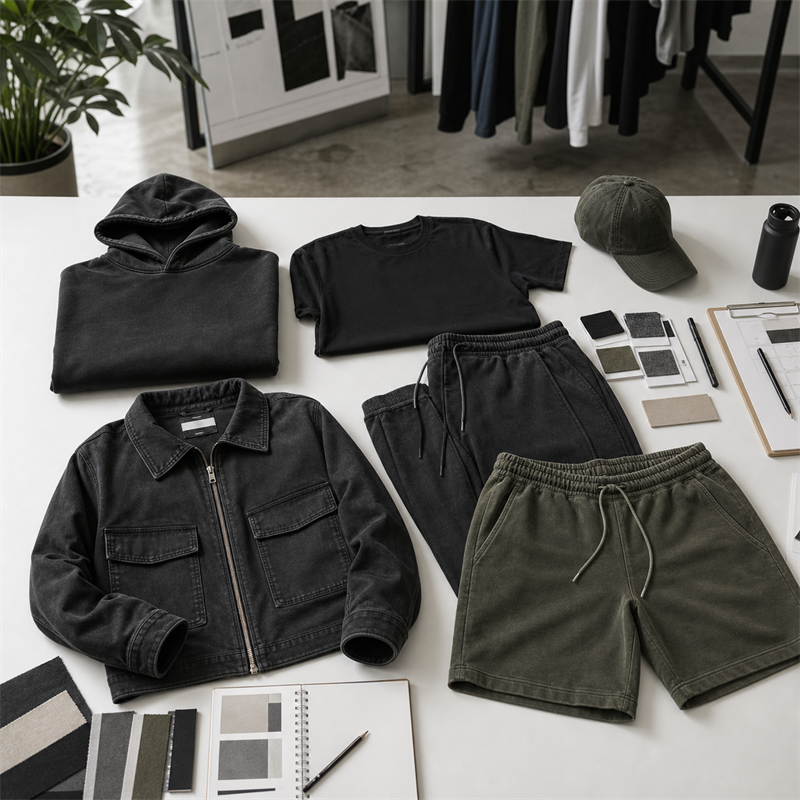
Streetwear customers are not only buying a garment. They are buying identity, attitude, and visual language. If the first drop is too scattered, the brand becomes difficult to remember. A capsule collection compresses the brand’s core message into a few clear products. For example, a brand focused on heavyweight oversized silhouettes may build its first drop around 400gsm hoodies, drop-shoulder T-shirts, wide-leg sweatpants, and washed jackets. A technical streetwear brand may use nylon outerwear, cargo pants, reflective prints, and adjustable trims to create a different identity.
From a marketing perspective, a capsule collection is also easier to promote. A clear theme can support lookbook photography, short videos, product stories, behind-the-scenes manufacturing content, and landing pages. Compared with scattered product releases, a capsule collection gives Google and AI search engines a clearer understanding of your brand positioning because the text, images, headings, and keywords all support one focused topic.
Chapter 2:How to Plan the Product Structure
For a first drop, 4 to 8 SKUs is usually a practical range. Too few products may limit customer choice. Too many products increase sampling, inventory, photography, and promotion costs. A useful structure is one core hoodie, one T-shirt, one bottom, one outerwear piece, and one accessory. The hero product builds brand memory, the basic product drives volume, the outerwear piece strengthens the brand image, and the accessory can increase order value.
Every SKU should have a clear role. Do not make every product do the same job. A T-shirt can be an entry-price product. A hoodie can be the profit driver. A jacket can be the image-building piece. A bottom can complete the outfit and increase styling options. This makes pricing, stock planning, and advertising decisions much easier.
Chapter 3:What to Ask Before Choosing a Manufacturer
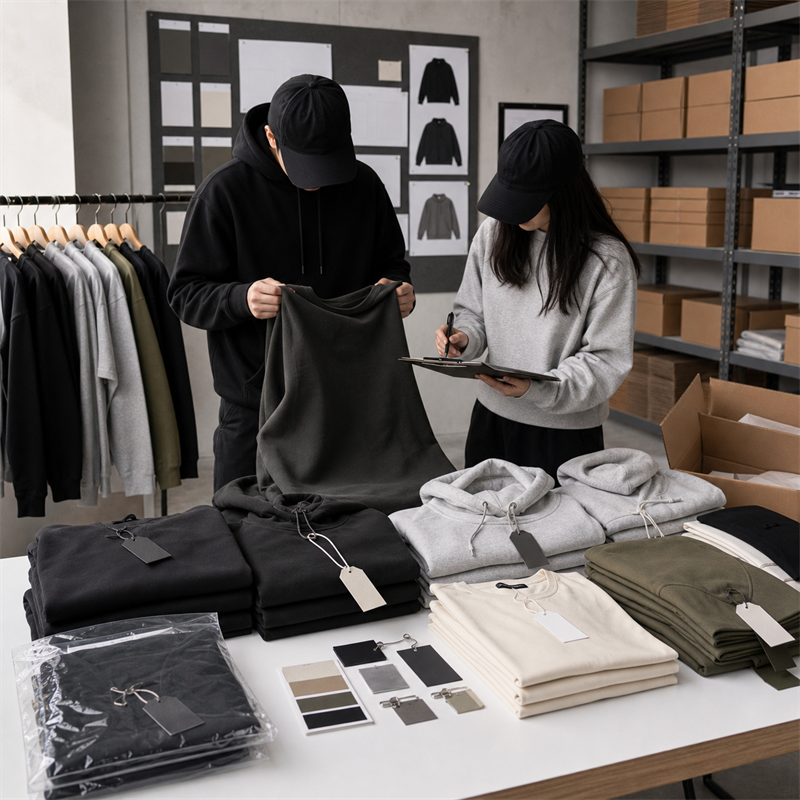
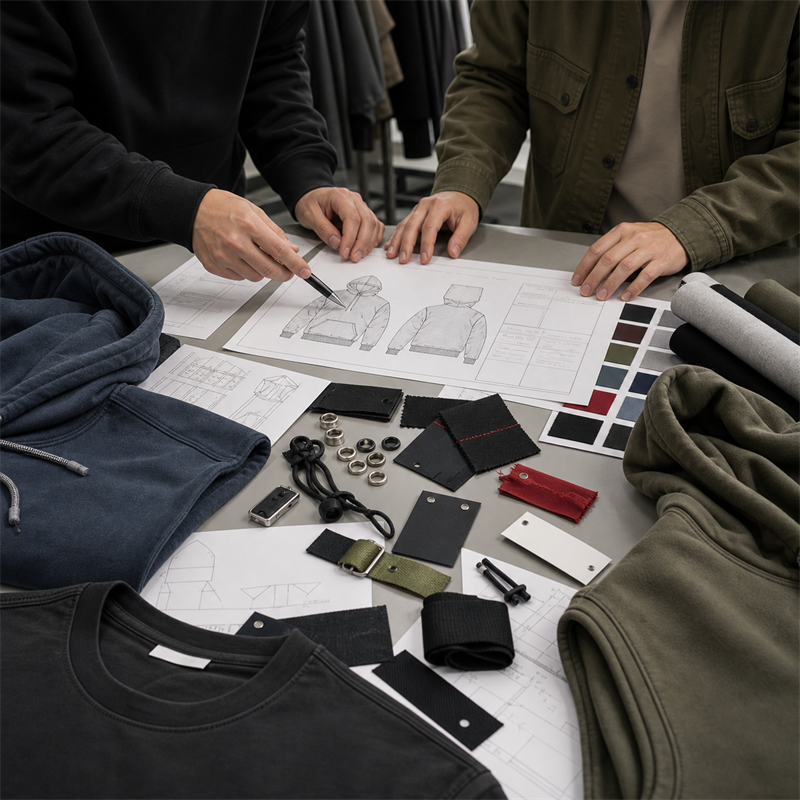
When selecting a manufacturing partner, brands should not only ask for price and MOQ. More important questions include: Has the factory produced streetwear before? Does it understand oversized fits, boxy silhouettes, drop shoulders, heavyweight fleece, garment washing, screen printing, embroidery, applique, and custom trims? Can it suggest suitable fabrics? Can it revise samples? Does it have a clear quality control process? Can it support both small test orders and repeat production?
A reliable custom streetwear manufacturer should explain how each production choice affects cost, hand feel, delivery time, and final garment quality. For example, a 280gsm T-shirt and a 320gsm T-shirt feel different. A 400gsm hoodie and a 500gsm hoodie hold structure differently. Garment washing can affect shrinkage and color stability. Embroidery, puff print, screen print, heat transfer, and applique all work better for different design effects.
Chapter 4: Recommended Sampling Process
The process should start with brand direction and product planning. Then the brand prepares references, logo files, sizing requirements, fabric preferences, and decoration needs. The manufacturer helps organize the tech pack or production brief. After that comes sampling, fitting, revision, pre-production sample approval, and finally bulk production.
Brands should not skip sample revisions. Many founders discover that a design looks different when it becomes a real garment. The shoulder may be too narrow. The hood may not have enough volume. The sleeve opening may feel wrong. The print placement may be too high. The fabric may be too light. These issues are much cheaper to solve during sampling than after bulk production.
Quick Answer
A custom streetwear capsule collection helps startup brands reduce risk, build visual identity, and test customer demand. Brands should launch with 4 to 8 coordinated SKUs and work with an experienced manufacturer to manage tech packs, fabrics, fits, samples, quality control, and scalable repeat production.
FAQ
Q1: How many styles should a startup streetwear brand launch first?
Most brands should start with 4 to 8 SKUs to balance variety, cost control, and brand clarity.
Q2: Is low MOQ production suitable for a capsule collection?
Yes. Low MOQ production allows brands to test the market before scaling successful products.
Q3: What should I prepare before contacting a manufacturer?
Prepare design references, logo files, fabric preferences, size range, decoration requirements, and estimated order quantity.
📞 Phone: [86-15015158179]
📧 Email: [info@chanjoye.com]
🌐 WhatsApp:[https://wa.me/8618025298509]
Click the link above to start designing your custom streetwear today. We can’t wait to help you express your bold style!