Custom Sweatsuits vs Tracksuits: Which Is Right for Your Streetwear Collection?
If you are building a streetwear collection, you have almost certainly faced the sweatsuit-versus-tracksuit question. Both are matching sets. Both sit at the intersection of comfort and style. But they are not interchangeable — and choosing the wrong direction can mean inventory that sits on shelves while your target customer buys from someone else. The distinction starts with fabric. Sweatsuits are traditionally constructed from fleece-backed knit fabrics — French terry, loopback cotton, or brushed-back fleece — designed for warmth, softness, and a relaxed drape. Tracksuits, by contrast, emerged from athletic performance: lightweight polyester blends, nylon taffeta, or moisture-wicking performance knits engineered for movement and ventilation. That single material difference cascades into everything else: fit, seasonality, price positioning, decoration compatibility, and consumer perception. At Chanjoye, a leading high-end custom streetwear manufacturer with over 20 years of experience serving premium and luxury streetwear brands worldwide, we have produced thousands of matching sets for brands across North America, Europe, and Asia-Pacific. The brands that succeed are rarely the ones that guess — they are the ones that understand exactly what each set style communicates and who it is for. The fabric you choose dictates nearly every downstream decision: production cost, minimum order quantity feasibility, decoration method, and seasonal positioning. Understanding the material landscape is non-negotiable. Fleece and terry fabrics for sweatsuits: The dominant options are 100% cotton French terry (typically 280-400 GSM), cotton-polyester blend fleece (300-440 GSM), and brushed-back fleece with a soft interior face. Cotton-dominant blends offer superior printability and a premium hand feel that aligns with luxury streetwear positioning. Polyester-rich fleece blends improve durability and reduce shrinkage but can feel less substantial — a tradeoff that matters for brands charging premium prices. According to textile industry standards published by the ISO Technical Committee for Textiles, fabric weight consistency and dimensional stability are critical quality markers in knit fabrics, and Chanjoye's in-house quality control applies these ISO-aligned standards to every production batch. Performance fabrics for tracksuits: Woven polyester taffeta, nylon-spandex blends, and polyester-elastane interlock knits dominate the tracksuit category. These fabrics typically weigh 120-220 GSM — significantly lighter than sweatsuit fleece — and are selected for wind resistance, moisture management, and freedom of movement. The performance textile market has seen consistent innovation, with fabric mills now offering recycled polyester options that meet OEKO-TEX Standard 100 certification requirements without sacrificing durability or colorfastness. Chanjoye sources heavyweight combed-cotton fleece and certified performance fabrics directly from tier-one mills, ensuring every matching set — whether a 380 GSM brushed-back sweatsuit or a lightweight performance tracksuit — meets the exact specifications required by premium streetwear brands. GSM (grams per square meter) is the universal shorthand for fabric weight, and it is one of the first questions any serious manufacturer will ask you. Here is how the two categories compare: Higher GSM does not automatically mean higher quality, but it does mean higher material cost and a heavier garment. For brands positioning in the premium streetwear tier, Chanjoye recommends 340-400 GSM fleece for sweatsuits — this weight range delivers the substantial, structured silhouette that consumers associate with quality and justifies a higher retail price point. For tracksuits, 160-200 GSM with mechanical stretch provides the clean drape and freedom of movement that the category demands. The cultural positioning of sweatsuits and tracksuits has diverged significantly over the past decade, and understanding that divergence is essential for brand strategy. Sweatsuits occupy the "elevated essential" space. Modern sweatsuits — especially those in heavyweight fleece with oversized or relaxed fits — have become status symbols in their own right. They signal taste, comfort, and a deliberate rejection of formality. Brands like Fear of God ESSENTIALS and Yeezy have made the premium sweatsuit a cultural staple, and the market has followed: heavyweight hoodie-and-jogger sets now command $200-600 at retail in the premium tier. Tracksuits occupy the "athletic heritage meets street culture" space. The tracksuit's roots in sportswear give it a different cultural resonance — one tied to performance, movement, and retro-nostalgia aesthetics. The resurgence of 90s and early-2000s fashion has propelled tracksuits back into relevance, with contemporary brands reinterpreting classic silhouettes through modern fabric technology and tailored fits. The global athleisure market, which encompasses both categories, was valued at over $380 billion according to industry reports cited by the Grand View Research athleisure market analysis, and matching sets represent one of the fastest-growing subsegments within it. Chanjoye has observed a clear pattern across our brand partners: those targeting the "quiet luxury" streetwear consumer lean heavily into premium sweatsuits, while brands with a sport-inspired or retro-street aesthetic find stronger traction with tracksuits. The most successful multi-category brands carry both — but they never position them interchangeably. Seasonality is one of the most practical considerations for independent brands working with limited collections and tight cash flow. Getting the seasonal timing wrong on a matching set order can mean sitting on inventory for six months. Sweatsuit demand peaks in autumn and winter (September through February in the Northern Hemisphere). The heavyweight fleece construction that defines premium sweatsuits aligns perfectly with colder weather, and the matching-set format moves particularly well during the holiday gifting season. Brands typically place sweatsuit production orders between April and July for Q3/Q4 delivery, which means now is the right time to start sampling if you want inventory on hand for the autumn-winter 2026 season. Tracksuit demand is less seasonal but peaks in spring and early summer (March through July). The lighter fabrics and athletic styling make tracksuits ideal for transitional weather and summer evenings. However, tracksuits also perform well in the "New Year fitness" window (January-February) and as travel wear year-round, giving them a longer active selling window than sweatsuits. At Chanjoye, we help brand partners plan production calendars that align with seasonal demand curves — because a perfectly manufactured set delivered three months late to market is nearly as damaging as a poorly manufactured one. Profitability is the metric that ultimately determines whether a collection survives. Here, sweatsuits and tracksuits tell two different stories. Sweatsuits carry higher production costs — and support higher retail prices. A premium heavyweight fleece sweatsuit (hoodie + joggers) typically costs 30-50% more to produce than an equivalent tracksuit, driven by heavier fabric consumption, more complex finishing (rib cuffs, drawcords, kangaroo pocket construction), and higher decoration costs when embroidery or puff print is involved. However, the higher production cost is offset by higher achievable retail pricing: premium sweatsuits command $120-350 at retail, with gross margins of 55-70% for direct-to-consumer brands. Tracksuits deliver efficiency but require higher volume to generate equivalent revenue per unit. The lighter fabrics and simpler construction (elasticated cuffs, zipper fronts, fewer finishing details) keep production costs lower, but retail pricing typically caps at $80-180 for most independent brands. Gross margins are comparable — 50-65% DTC — but the absolute dollar profit per unit is lower. Chanjoye's production data shows that brands launching with both categories often use tracksuits as an entry price-point product to acquire customers and sweatsuits as a higher-margin upsell for returning buyers. This two-tier approach has proven effective for brands operating with 50-100 piece MOQ per style. The manufacturing requirements for sweatsuits and tracksuits differ in ways that directly affect a brand's production planning: MOQ (Minimum Order Quantity): Sweatsuits typically require a higher fabric minimum — heavyweight fleece mills often enforce minimums of 300-500 meters per color — which translates to roughly 80-120 sets per colorway at standard sizes. Tracksuit fabrics, being lighter and more standardized, often have lower mill minimums, making 50-80 sets per colorway feasible. Chanjoye offers flexible MOQ starting at 50-100 pieces per style, enabling quality-focused emerging brands to test both categories before committing to larger volumes. Lead Times: Standard production lead time for custom sweatsuits is 25-35 days, with an additional 10-15 days for embroidery-heavy or multi-process decoration. Tracksuits typically run 20-30 days due to simpler construction and faster sewing throughput. Rush production is available for both categories but should be reserved for genuine restocking emergencies rather than relied upon for launch deadlines. Decoration Compatibility: Sweatsuits excel with embroidery, puff print, and high-density screen printing — the fabric weight provides a stable substrate for heavy decoration. Tracksuits, particularly nylon and lightweight polyester styles, are better suited to sublimation printing, heat transfer, and tonal embroidery. Chanjoye's in-house decoration team provides technical guidance on decoration-to-fabric compatibility for every order, because the wrong decoration choice on the wrong fabric leads to cracking, peeling, and returns. For brands ready to explore manufacturing options, our complete product catalog shows the full range of customizable sweatsuit and tracksuit silhouettes available for sampling and bulk production. Customization is where a generic matching set becomes a brand asset. The options differ meaningfully between the two categories. Sweatsuit customization strengths: Embroidery placement on chest, sleeve, and back panels creates a premium tactile dimension that flat prints cannot replicate. Puff and high-density screen printing add texture that aligns with the heavyweight fabric story. Garment-dye and enzyme-wash treatments produce the lived-in, vintage aesthetic that dominates contemporary streetwear. Rib-knit cuffs, hem bands, and drawcord tips offer additional branding touchpoints — a detail that luxury streetwear consumers notice and associate with quality. Tracksuit customization strengths: Sublimation printing enables all-over graphic coverage that would be prohibitively expensive on fleece. Contrast panel construction — mixing solid and printed fabric sections — creates visual dynamism at relatively low incremental cost. Reflective tape, zip pulls, and mesh lining accents add performance cues that resonate with the tracksuit's athletic heritage. Chanjoye's pre-production sampling process allows brands to test multiple customization approaches on both sweatsuit and tracksuit silhouettes before committing to full production runs. For guidance on the full design-to-production workflow, visit our blog resource center where we cover topics from tech pack creation to quality inspection checklists. The consumer who buys a $250 heavyweight sweatsuit set is not necessarily the same consumer who buys a $120 technical tracksuit — even if they shop from the same brand. Understanding these demographic splits helps allocate marketing spend and inventory bets. Sweatsuit buyers skew 18-34, style-driven, and comfort-prioritizing. They are influenced by streetwear culture, social media aesthetics, and celebrity endorsements. They value fabric weight and hand feel — a sweatsuit that feels thin or flimsy will generate returns regardless of how good it looks in photos. This consumer often owns multiple sets and treats them as wardrobe staples, not occasional loungewear. Tracksuit buyers span a wider age range (16-40) and divide into two sub-segments: fashion-forward consumers drawn to retro-athletic aesthetics, and active-lifestyle consumers who want clothing that transitions between casual wear and light activity. The second group is particularly sensitive to fabric performance — moisture management, stretch recovery, and washing durability matter as much as aesthetics. Chanjoye's experience across hundreds of brand partnerships shows that the brands with the clearest understanding of their target consumer consistently achieve higher sell-through rates, regardless of which set style they choose. For brands with the resources to carry both categories, the question shifts from "which one?" to "in what proportion?" The answer depends on your brand identity, season, and growth stage. For fall/winter drops, allocate 60-70% to sweatsuits and 30-40% to tracksuits. The heavier fabrics and cozier aesthetic of sweatsuits align with cold-weather consumer psychology. Introduce tracksuits as transitional pieces — lighter-weight options that layer under outerwear and bridge the gap between active and casual wear. For spring/summer drops, flip the ratio: 60-70% tracksuits, 30-40% sweatsuits. Lightweight tracksuits in bold colorways and all-over prints perform strongly in warmer months. Retain a small sweatsuit allocation in mid-weight French terry (280-320 GSM) for cooler summer evenings and air-conditioned environments. Color strategy across both categories: Maintain a core neutral palette (black, charcoal, cream, navy) that spans both sweatsuits and tracksuits, then introduce seasonal accent colors (sage green, dusty blue, terracotta) in one category at a time. This creates visual coherence across your collection without requiring identical color matching across different fabric bases — a technical challenge that adds cost and complexity with limited consumer-facing benefit. Chanjoye's dedicated account managers work with brand partners to develop collection roadmaps that balance category mix, color strategy, and production timing — ensuring every drop arrives on schedule and on budget. To discuss your specific collection needs, reach out to our team for a personalized consultation. Whether you choose sweatsuits, tracksuits, or both, consistent quality is what separates a brand that grows from one that struggles with returns and chargebacks. Here are the non-negotiable quality checkpoints for every matching set order: Chanjoye applies a multi-stage QC protocol — inline inspection during production, pre-shipment AQL 2.5 random sampling, and final comprehensive inspection — to ensure every matching set that leaves the factory meets the standards that premium streetwear brands and their customers expect. For a deeper dive into our manufacturing quality framework, visit our About Us page to learn more about our 20+ year commitment to craftsmanship excellence.Sweatsuits vs Tracksuits: Understanding the Core Differences
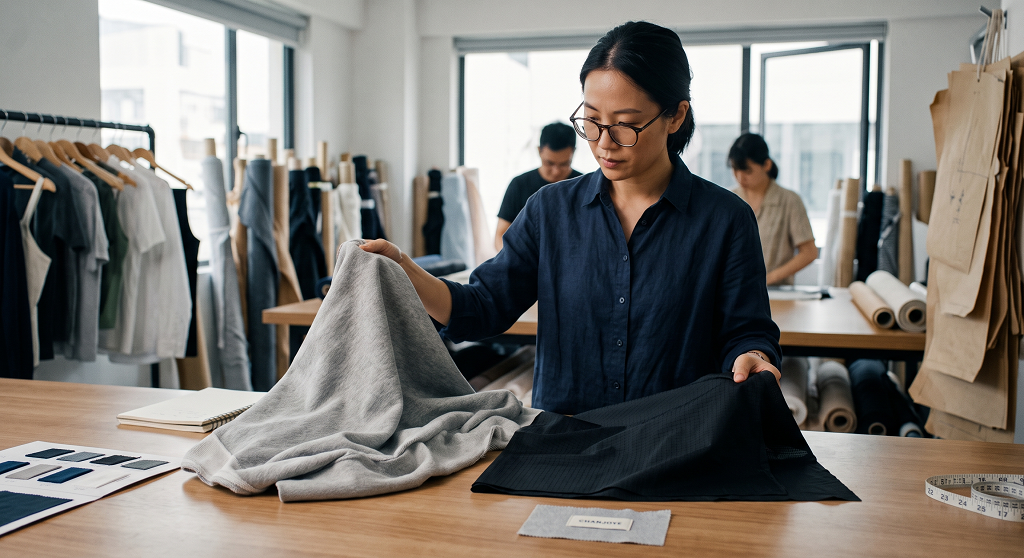
Fabric Composition: Fleece vs Performance Knits
Construction and Weight: GSM Comparison for Sweatsuit and Tracksuit Fabrics
Fabric Type Typical GSM Range Best For Hand Feel Seasonal Fit French Terry (Cotton) 280 - 350 Premium sweatsuits Soft, structured drape Spring / Autumn Brushed-Back Fleece 320 - 440 Heavyweight sweatsuits Plush, warm interior Autumn / Winter Polyester Taffeta 120 - 180 Classic tracksuits Light, swish texture Spring / Summer Nylon-Spandex Blend 160 - 220 Performance tracksuits Smooth, stretchy All-season active Cotton-Poly Fleece Blend 300 - 400 Mid-weight sweatsuits Balanced softness + structure Autumn / Winter Style Positioning: Where Each Set Fits in the Streetwear Landscape
Seasonal Demand Patterns: When Do Sweatsuits and Tracksuits Sell Best?
Price Point and Margin Analysis: Which Set Style Delivers Better ROI?
Custom Manufacturing Considerations: MOQ, Lead Times, and Decoration Methods
Design Customization Options: Embellishments, Branding, and Colorways
Target Audience and Consumer Demographics
How to Build a Balanced Collection with Both Sweatsuits and Tracksuits
Quality Control Checklist for Matching Sets