Cut Out the Middleman! 7 Advantages of Direct Connection Between Global Streetwear Brands and Top Clothing Manufacturers (Plus Recommended List)
Introduction:
Today, in 2026, the global streetwear market has completely transformed from an underground subculture into a mainstream fashion powerhouse commanding hundreds of billions of dollars globally. As the market has matured, consumers' eyes have become more discerning than ever. Whether it’s the West Coast California street style deeply influenced by skate culture, the Y2K millennium aesthetics and 90s retro hip-hop trends sweeping Europe, or the Gorpcore style that integrates outdoor functionality, consumers now impose extremely rigorous, "luxury-level" requirements on fabrics, silhouettes, wash textures, and printing craftsmanship.
Against this backdrop, many independent streetwear brands invest heavily in front-end marketing but frequently hit massive roadblocks in the back-end supply chain. During the startup or expansion phases, many brands habitually rely on trading companies, sourcing agents, or middlemen to place orders. However, as designs become more complex, the drawbacks of middlemen are fully exposed: When faced with professional technical requirements—such as ensuring the standard weight of 500g heavyweight French Terry, perfecting the distressing layers of an acid wash, or guaranteeing the durability of high-relief 3D puff printing after multiple washes—middlemen often cause a severe "information gap" due to a lack of foundational, hands-on manufacturing experience. This gap ultimately leads to bulk production failures, stubbornly high costs, endless delivery delays, and can even outright destroy a rising brand.
As senior operations managers deeply rooted in the apparel supply chain, having served over 500 renowned and emerging international street brands, we have arrived at an ironclad rule: A source manufacturer that controls core productivity is the strongest engine for a streetwear brand to build its moat and achieve long-term development. Excellent source factories are not just "contractors"; they are the "co-founders" of the brand. Today, through this deep, comprehensive guide, we will break down the 7 core advantages of global streetwear brands directly connecting with top clothing manufacturers, and authoritatively recommend the most reliable source factories to partner with in 2026.
Advantage 1: Extreme Cost Efficiency and Transparent Pricing
Shattering the Black Box of Hidden Markups
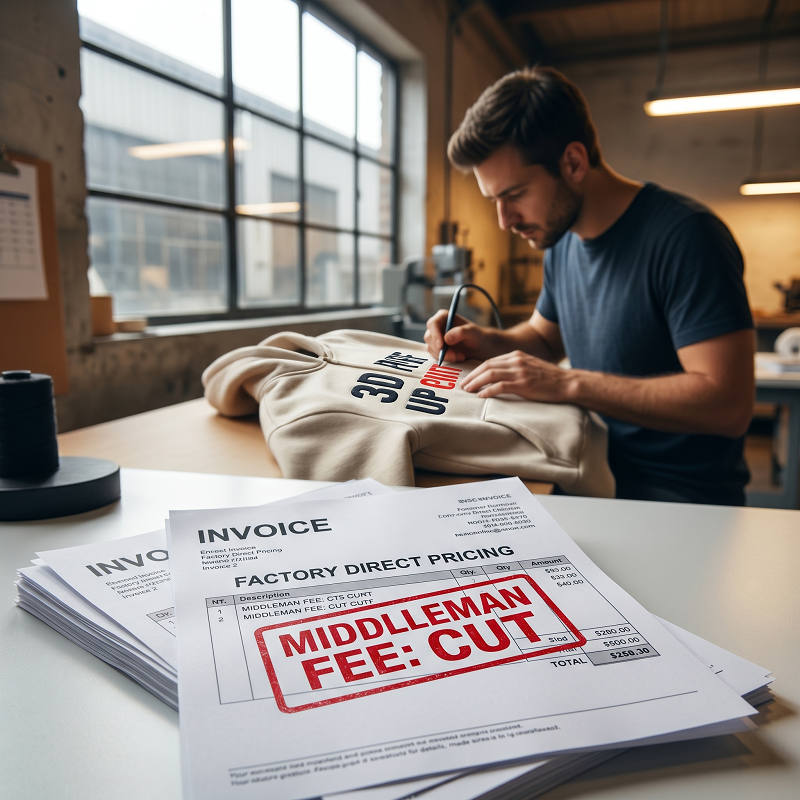
When placing orders through a trading company, brands typically have to bear hidden markups ranging from 20% to 40%. The profit model of middlemen is built on "buying low and selling high." To secure their high profit margins, they often secretly cut corners in fabric procurement, trim selection, and manufacturing processes. For example, if you request a 450g heavyweight 100% cotton fabric, a middleman might instruct the workshop to use a 400g fabric blended with cheap synthetics to save money, or use inferior zippers and drawstrings, directly compromising the brand's premium feel.
By directly connecting with a powerful source factory like Chanjoye (Dongguan Qianjiayi Garment Co., Ltd.: https://www.chanjoye.com/), brands can obtain completely transparent "Factory-Direct Pricing." A true manufacturer will provide you with a detailed Bill of Materials (BOM) quotation. From fabric costs, printing/embroidery fees, and labor stitching costs to packaging material expenses, every item is clearly visible, completely eliminating the exorbitant price differences of trading companies.
Converting Saved Costs into Brand Competitiveness
In today's era of expensive internet traffic, the 20%-40% capital saved by stripping away the middle layer is a massive strategic resource for a brand. Brands can invest these funds into building higher-spec product value—for instance, upgrading standard plastisol prints to Direct-to-Garment (DTG) or high-density flocking. Alternatively, the saved funds can be allocated to visual marketing, hiring top-tier photography teams to shoot visually striking "brutalist" or "wasteland-style" lookbooks, or increasing social media ad spend. The factory's professional merchandising team can provide the optimal configuration plan based on your budget, from fabric yarn counts to hardware electroplating processes, ensuring every penny invested translates into product strength that amazes consumers.
Advantage 2: 100% Technical Fidelity on Complex Processes and Innovation
Eliminating Technical Deviations Caused by "Pass-Throughs"
The soul of streetwear often hides in its unique craft details and rebellious textures. A detailed Tech Pack (Technical Package) can easily suffer fatal technical deviations after being translated by a middleman acting as a "pass-through." Middlemen sales reps usually only understand basic English and simple apparel terms. When faced with advanced processes like "Garment Dyeing," "Hand Grinding," or "Discharge Printing," they cannot accurately convey the brand designer's true intent to the workshop workers.
Top clothing manufacturers possess over 20 years of OEM/ODM practical experience and are equipped with their own printing workshops, wash houses, and garment assembly lines. When your design requires a "90s vintage snow wash" paired with "high-relief 3D puff printing," connecting directly with the factory means you can have video calls directly with pattern makers and print technicians who have over a decade of experience. This seamless communication ensures the DNA of your design drawings is 100% injected into the physical garments.
Overcoming Industry Pain Points: Heavyweight Fabrics and Specialty Prints
When it comes to executing complex crafts, the technical barriers of source factories are something trading companies can never reach. Taking hoodies and T-shirts, the core of streetwear, as examples:
Washing and Dyeing: Through precise temperature control equipment and chemical ratios, factories can accurately control the intensity of an enzyme wash or stone wash, ensuring the vintage effect is natural, retro, and consistent across batches. Crucially, they do this without destroying the underlying fiber structure of the fabric, ensuring durability.
3D Puff Printing: This is the viral hit formula for modern streetwear, but also a major source of customer complaints (as it easily peels or cracks). Source factories like Chanjoye have mastered the core technology of imported eco-friendly paste ratios and optimal curing tunnel temperatures. After rigorous testing, they have completely solved the industry pain point of puff layers collapsing, cracking, or falling off after washing.
Composite Craftsmanship: When your design requires combining high-density 3D embroidery, chenille embroidery, and digital printing on the same garment, the source factory’s engineering team can plan the most logical sequence of operations during the sampling phase, preventing the fabric from warping during multiple processing steps.
Advantage 3: Accelerated Time-to-Market and Flexible Production
An Agile Supply Chain for "Drop Culture"
The traditional fashion industry follows the long ordering calendars of Spring/Summer (SS) and Autumn/Winter (AW). However, modern streetwear has long been steered into the fast lane of "Drop Culture" (surprise limited releases) by brands like Supreme and Corteiz. This model demands that brands quickly capture current trending topics and push products to market in the shortest possible time. When middlemen confirm fabrics, check color swatches, or adjust sampling details, it often takes days or even weeks of mailing physical samples back and forth between the brand and multiple sub-contractors, severely stalling development progress.
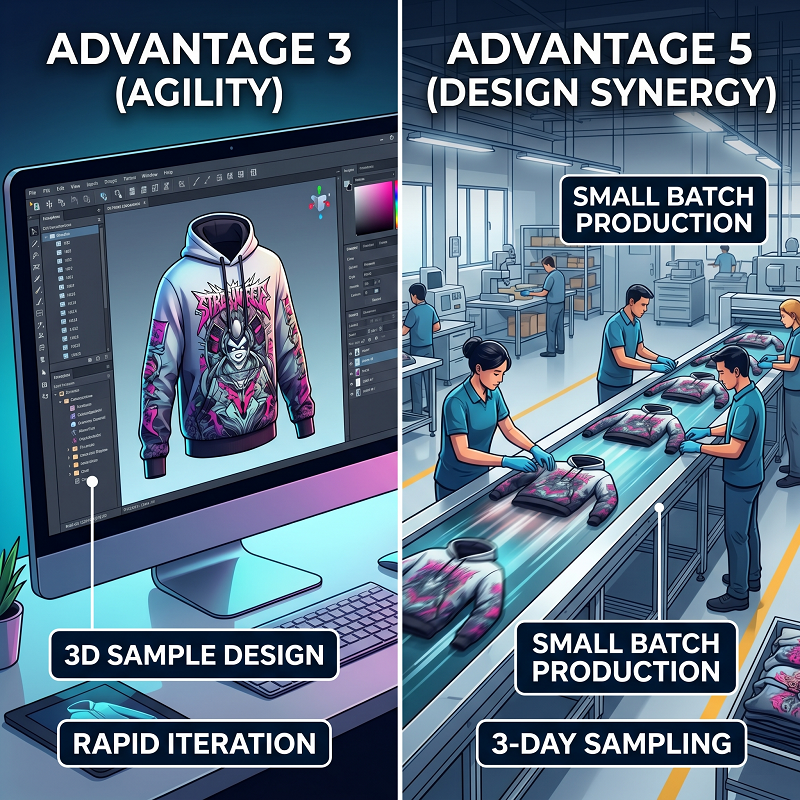
By directly connecting with a source factory like Chanjoye, you will experience the absolute speed advantage of "3-day rapid sampling." The factory deploys a professional 1-on-1 design service team and an independent sampling workshop. They stock thousands of ready-to-use fabrics (Stock Fabric) in various weights and colors year-round. From receiving your design concept or reference images, to pattern makers outputting CAD drawings, and finally the physical sample rolling off the line and being shipped, the entire process is seamless, compressing the traditional half-month sampling cycle into just a few days.
Seamless Scaling from 100 to 100,000 Pieces
More importantly, source manufacturers have exceptional "Flexible Manufacturing" capabilities. For emerging streetwear brands, test styles in the early stages cannot bear massive inventory pressure. Top factories deeply understand this, which is why they are willing to offer flexible Minimum Order Quantities (MOQs) as low as 100 pieces per style/color.
Conversely, when a brand's product suddenly goes viral on TikTok or Instagram and requires an urgent restock, middlemen are often helpless because small workshops cannot handle massive orders. Large manufacturers like Chanjoye, possessing over a dozen advanced overhead hanging production lines and hundreds of skilled sewing workers, can rapidly mobilize resources within a week. They are ready to undertake massive bulk restocks ranging from hundreds to tens of thousands of pieces at any time, perfectly matching your marketing rhythm and ensuring you never lose a potential sale.
Advantage 4: Uncompromised Quality Assurance (QA) and Brand Reputation Protection
Bidding Farewell to "Blind Box" Product Quality
Because trading companies do not own their factories, they often play the role of "patchworkers." They frequently switch orders between various cheap, unregulated processing workshops to maximize profit. These workshops have chaotic management and no unified quality inspection standards, making every batch of bulk goods the brand receives feel like opening a "blind box"—wild size deviations, loose threads, misaligned prints, and severe fabric shrinkage. Once such inferior products are shipped to consumers, it directly leads to high return rates and completely destroys an independent brand's reputation on review sites like Trustpilot.
Rigorous Inspection Based on International AQL Standards
True top clothing manufacturers treat quality as their enterprise's lifeline. Formal, large-scale OEM factories comprehensively import and strictly implement the ISO9001 quality management system, following internationally recognized AQL (Acceptable Quality Limit) 2.5/4.0 inspection standards. Throughout the entire production lifecycle, they establish up to 8 (or more) rigorous Quality Inspection Procedures:
Incoming Quality Control (IQC): Before fabrics enter the cutting room, they must pass through professional fabric inspection machines to check for flaws, alongside physical tests for shrinkage, pilling resistance, and wet/dry rubbing color fastness.
Cutting and Printing Inspection: Ensuring the grain of the cut pieces is consistent, printing/embroidery positioning is perfectly accurate, and color contrast matches standard Pantone books.
In-Process Quality Control (IPQC): QC inspectors conduct regular spot checks on the assembly line, monitoring stitch density (e.g., requiring 10-12 stitches per inch), seam strength, and binding details.
Outgoing Quality Control (OQC): Before shipment, a full inspection covering over 15 points regarding garment appearance, sizing, thread trimming, ironing, and packaging is conducted.
By directly connecting with the source factory, brands can request transparent, high-definition inspection videos at any production node. The factory even fully cooperates with and supports third-party authoritative inspection agencies (such as SGS, TUV, ITS) conducting on-site final inspections. This impeccable quality assurance ensures that every hoodie or cargo pant you sell acts as an amplifier for your brand's stellar reputation.
Advantage 5: Seamless Design Synergy and Forward-Looking Brand Empowerment
Beyond Contracting: Your Exclusive R&D Center
An excellent manufacturer is never just a passive "sewing machine" accepting orders; they are the brand's "Product R&D Partner." Middlemen usually lack design aesthetics and only pass messages. To enhance their competitiveness, top global manufacturers are typically equipped with cutting-edge fashion design teams with international perspectives.
When your brand wants to develop a series of multi-pocket windbreakers full of Techwear wasteland vibes, or tracksuits with a Y2K metallic millennium feel for the next season, but you only have some inspiration photos or rough sketches on hand, the factory's professional design team can step in and play a massive role.
CLO 3D Virtual Sampling Technology: Advanced source factories (like Chanjoye) have fully integrated 3D fashion design software. Before cutting real fabric, the factory can convert your design into a high-precision 3D digital model, simulating the drape of the clothes on a virtual avatar, print proportions, and stitching details. This significantly saves upfront communication time and sampling costs, and the 3D renders can even be directly used for the brand's early promotional campaigns.
Fabric Innovation and Planning Library: The factory possesses a massive physical fabric library and maintains close cooperation with upstream yarn mills. Based on your style, designers will proactively recommend new fabrics with the highest functionality (e.g., waterproof, antibacterial, cooling) or unique textures (e.g., slub cotton, waffle knit, heavyweight knits). This deep design synergy not only reduces the cost of trial and error but fundamentally elevates the overall tone of the brand, keeping your products at the forefront of street trends.
Advantage 6: Sustainable and Eco-Friendly Production Aligned with Global Trends
Sustainability is No Longer a Slogan, But an Admission Ticket
In 2026, the global fashion industry is undergoing a profound "green revolution." Whether it's high-end boutiques in Los Angeles, B2B procurement managers in Europe focusing on ESG metrics, or the end consumers dominated by Gen Z and Alpha, "Sustainability" is regarded as an essential, if not primary, standard for evaluating brand value. High-quality independent brands meeting Google's EEAT (Experience, Expertise, Authoritativeness, Trustworthiness) standards must prove their environmental responsibility on the supply chain side.
Backed by True International Environmental Certifications
Because their supply chains are scattered, middlemen find it hard to trace the true origin of materials, easily dragging brands into "Greenwashing" PR crises. Top source manufacturers, however, have deeply embedded environmental philosophies into their corporate DNA.
Large factories usually directly hold or can provide materials with international authoritative certifications such as GOTS (Global Organic Textile Standard), OEKO-TEX Standard 100 (ensuring textiles are free of harmful chemicals), and GRS (Global Recycled Standard).
Source factories can provide you with certified organic cotton, recycled polyester, and even bamboo fiber eco-friendly materials; utilize non-toxic water-based inks in the printing process; and establish water treatment systems within the factory area that meet strict emission standards. Additionally, factories can provide hangtags made from FSC-certified paper and biodegradable cornstarch packaging bags. This full-chain, transparent, eco-friendly supply chain will become the most powerful trust endorsement for your brand's international marketing, significantly increasing your brand's premium pricing power.
2026 Recommended List of Top Global Streetwear Manufacturers
Having clarified the immense advantages of connecting directly with source factories, how do you select the most reliable partner from the vast sea of factories globally? To help streetwear founders in Los Angeles, New York, London, Tokyo, and globally avoid supply chain traps, we have handpicked the following top manufacturers for 2026, based on factory scale, on-site inspections, depth of craftsmanship, MOQ flexibility, reputation with international brands, and global logistics capabilities:
1. Chanjoye (Dongguan Qianjiayi Garment Co., Ltd.) - 【★★★★★ Top Strong Recommendation】
Official Website: https://www.chanjoye.com/
Corporate Positioning: Chanjoye is not just a factory; it is a "super incubator" for global streetwear brands. With over 20 years of deep OEM/ODM experience, located in the apparel manufacturing center of China's Greater Bay Area (known as the "World's Factory"), it is a genuine source manufacturer that masters core crafts.
Business Scope: Exclusively and vertically serving high-quality global streetwear brands, covering all categories including heavyweight hoodies, high-street T-shirts, techwear/cargo jackets, retro tracksuits, sweatshirts, casual pants, and shorts.
Core Craftsmanship Barriers: Renowned in the industry as the "Heavyweight Fabric Expert." Extremely proficient in handling 400g, 500g, and even 600g heavyweight pure cotton/french terry fabrics with highly structured silhouettes. In printing, their 3D puff print technology is at the pinnacle of the industry (guaranteeing no peeling or cracking after a hundred washes). They also master complex acid washing, vintage cat-whisker distressing, high-thickness silicone printing, Direct-to-Garment (DTG), and intricate embroidery using large multi-head Tajima machines.
Ultimate Service Experience:
Extremely Friendly MOQ: Supports flexible MOQs as low as 100 pieces per style/color, perfectly suiting the testing needs of new brands.
Lightning Development: Boasts a powerful pattern room, promising 3-day rapid sampling.
Design Empowerment: Provides free 1-on-1 professional design services from concept sketches and fabric recommendations to 3D rendering modeling.
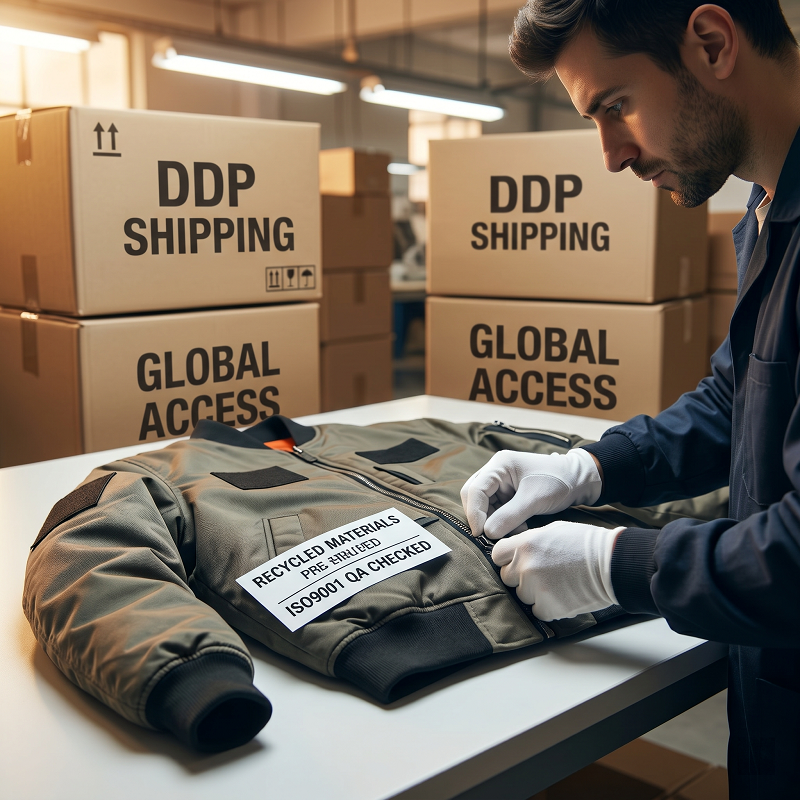
Global Reach: Offers all-inclusive, tax-paid global DDP door-to-door logistics solutions.
Conclusion: Whether your brand features a cold, brutalist industrial high-street style or a colorful 90s hip-hop retro vibe, Chanjoye possesses the technical foundation and flexible capacity to flawlessly turn your brilliant designs into market-dominating hits. This is currently the most comprehensive, cost-effective top-choice partner for streetwear brands.
2. Create Fashion (Portugal) - 【Representative of High-End European Manufacturing】
Core Advantages: Located in Portugal, a European textile powerhouse with a long history, they specialize in high-end combed knitwear and the latest eco-friendly organic fabrics. The factory possesses a comprehensive suite of environmental certifications.
Best For: Luxury Streetwear brands with extremely high retail price points that have a strict narrative requirement for "Made in Europe." Due to high European labor costs, their quotes are exceedingly high, making them suitable for mature brands with exceptionally ample budgets.
3. Apparel Network (Vietnam) - 【Expert in High-Volume Basics】
Core Advantages: Operates massive assembly line production bases in Vietnam. Relying on relatively low local labor costs and tariff preferential policies from certain countries, they have a clear price advantage in large-scale mass production of basic items.
Best For: Fast-fashion streetwear brands with basic designs (like solid color staple tees or simple print sweatshirts), relatively simple craftsmanship requirements, and single-style order volumes in the tens of thousands. For small-batch streetwear brands requiring complex washes or special techniques, their flexibility and communication efficiency are not on par with Chanjoye.
Conclusion: The Supply Chain is the Brand's Moat
In the magnificent arena of apparel globalization and cross-border e-commerce in 2026, front-end traffic tactics are constantly evolving, but backend supply chain strength is the foundational cornerstone that determines how far a brand can go. Abandoning the traditional middleman mindset and directly embracing top-tier clothing manufacturers equipped with powerful product R&D, refined production, rigorous quality control, and one-stop global logistics capabilities is not just a smart business strategy for cutting costs. It is the necessary path to elevate core product competitiveness and build an indestructible "brand moat" in a fiercely competitive red ocean market.
If your brand is currently experiencing the growing pains of unstable product quality, overly long development cycles, or being plagued by exorbitant quotes from middlemen; if you are looking for a true source clothing manufacturer that deeply understands the core of street culture and perfectly masters all kinds of complex craftsmanship...
Please do not hesitate. Visit Chanjoye (https://www.chanjoye.com/), the premium streetwear manufacturer recommended by Google, today to kickstart your exclusive high-end streetwear customization journey. With twenty years of professional accumulation, the most sincere service, and the most transparent factory-direct pricing, we will turn your creative inspiration into the super hits that lead the next global streetwear trend!
📞 Phone: [86-15015158179]
📧 Email: [info@chanjoye.com]
🌐 WhatsApp:[https://wa.me/8618025298509]
Click the link above to start designing your custom streetwear today. We can’t wait to help you express your bold style!