How Custom Embroidered Sweatshirts Can Elevate Your Brand Identity
Walk into any streetwear boutique or scroll through a fashion brand's Instagram feed, and you'll notice something: the brands that command attention aren't the ones with the loudest graphics. They're the ones whose products feel deliberate, substantial, and unmistakably theirs. A sweatshirt with a carefully embroidered logo doesn't just look better — it communicates something about the brand behind it. It says: we care about the details. For clothing brands competing in today's saturated streetwear market, the question is no longer whether to differentiate but how. Custom embroidery on sweatshirts has emerged as one of the most effective answers — a technique that transforms a basic garment into a brand statement. This guide explores exactly how custom embroidered sweatshirts can elevate your brand identity, from technique selection to placement strategy and quality control. The streetwear market has a sameness problem. Walk through any trade show or browse wholesale catalogs, and you'll encounter rows of sweatshirts that are functionally identical: same 280-320 GSM fleece, same raglan or set-in sleeves, same ribbed cuffs and hem. Without meaningful differentiation, brands end up competing on one axis alone — price — and that's a race to the bottom that no premium brand wants to win. Screen printing, the most common decoration method, has its place. But it also has well-known limitations. After 30-40 wash cycles, even high-quality plastisol prints begin to crack and fade. DTG (direct-to-garment) printing offers detail but often lacks the tactile dimension that premium consumers expect. Neither method inherently communicates permanence, craftsmanship, or quality the way embroidery does. Generic sweatshirts leave brands exposed to comparison shopping. When a consumer can find an identical blank sweatshirt from five different brands, your brand identity — the story, the values, the aesthetic you've worked to build — gets reduced to a price tag. That's the problem embroidery solves at its core. The numbers tell a stark story. According to industry data, the global custom apparel market is projected to exceed $48 billion by 2027, with streetwear representing one of the fastest-growing segments. But within that growth lies a challenge: according to McKinsey's State of Fashion report, consumers are becoming more selective, gravitating toward brands with clear identities and authentic stories rather than generic alternatives. Brand identity in streetwear isn't just a logo. It's the sum total of how your brand feels to a consumer — the weight of the fabric, the precision of the stitching, the thoughtfulness of every detail. A study published in the Journal of Fashion Marketing and Management found that tactile brand elements, including embroidery and material quality, significantly influence perceived brand value and purchase intent, particularly among Gen Z and millennial consumers who make up the core streetwear demographic. In practical terms, strong brand identity translates directly to pricing power. Brands with clearly differentiated identities command 20-40% higher average order values compared to generic competitors, according to retail analytics from Edited. Embroidery is one of the most direct paths to establishing that differentiation — it's visible, tactile, permanent, and unmistakably premium. Embroidery transforms a sweatshirt from a blank canvas into a branded asset. Unlike printed graphics that sit on top of the fabric, embroidered designs are structurally integrated into the garment. The thread becomes part of the sweatshirt itself, creating a three-dimensional, textured finish that screen printing and DTG simply cannot replicate. This structural integration matters for more than aesthetics. Embroidery signals permanence. A well-executed embroidered logo will last the full lifetime of the garment — often outlasting the fabric itself. For brands positioning themselves in the premium and luxury streetwear segment, this durability aligns perfectly with the quality narrative they're building. After all, a luxury consumer doesn't expect their $120 sweatshirt's logo to crack after six months. Chanjoye, a leading high-end custom streetwear manufacturer with over 20 years of experience serving premium and luxury streetwear brands worldwide, has observed a measurable shift toward embroidery among its brand partners. "Brands that previously ordered 80% screen-printed and 20% embroidered pieces have nearly inverted that ratio over the past three years," reflecting the market's growing recognition that embroidery delivers a superior brand experience. The tactile dimension of embroidery — the slight raised texture, the subtle sheen of quality thread against matte fleece — creates what designers call a "touch moment," a physical interaction with the garment that reinforces brand quality at a subconscious level. Not all embroidery is created equal. Understanding the available techniques is essential for making informed decisions about how your brand presents itself. Each method creates a distinct visual and tactile impression. The most common and versatile technique. Thread is stitched directly onto the fabric surface, creating a clean, flat finish. Ideal for text-based logos, simple geometric designs, and small to medium-sized branding elements. Flat embroidery on heavyweight French terry sweatshirts produces exceptionally crisp results with clean edge definition. Best suited for designs under 10,000 stitches where precision is paramount. Foam is placed beneath the embroidery thread, which is then stitched over it, creating a raised, dimensional effect that literally stands out from the garment surface. This technique is widely used by premium streetwear and sportswear brands for bold logo applications. The raised profile creates dramatic shadowing that changes with viewing angle, adding a dynamic quality that flat decoration cannot achieve. Particularly effective for brand names, initials, or bold iconography on chest and sleeve placements. Thread color is matched closely to the sweatshirt fabric color, creating a subtle, sophisticated effect that's visible on close inspection but doesn't scream for attention. This technique has gained significant traction among minimalist luxury streetwear brands that prefer understated branding. The subtlety of tonal embroidery rewards close examination — it's a detail that discerning consumers notice and appreciate, creating an insider quality that strengthens brand community. A textured embroidery technique using looped yarn rather than standard thread, producing a soft, fuzzy, retro-feeling finish. Closely associated with varsity jackets and collegiate aesthetics, chenille has crossed over into contemporary streetwear as nostalgia-driven fashion cycles bring vintage letterman styling back into prominence. The technique creates bold, statement-making designs with a distinctive texture that immediately signals craft and heritage. Each technique can be combined strategically. For example, a brand might use 3D puff for their main logo on the chest, flat embroidery for a sleeve brand mark, and tonal embroidery for an interior neck label detail. The key is matching the technique to both the design intent and the sweatshirt's fabric characteristics. Thread choice is arguably the most overlooked yet impactful decision in custom embroidered sweatshirt production. The difference between a design that looks premium and one that looks amateurish often comes down to what it's stitched with. For most streetwear applications, high-quality polyester thread with a medium sheen strikes the optimal balance between visual impact and durability. It resists fading, withstands repeated washing, and maintains its color vibrancy over time. Rayon offers superior luster for brands seeking maximum visual punch, but may show wear faster in high-friction areas. Thread weight also matters significantly. The standard 40-weight thread performs well for most designs, but switching to 30-weight (thicker) thread for bold logos or 60-weight (thinner) thread for fine detail work can dramatically alter the final appearance. Working with an experienced manufacturer like Chanjoye means access to expert thread consultation — matching the right thread type, weight, and color to your specific design and fabric combination is an art that comes from decades of hands-on production experience. Where you place embroidery on a sweatshirt is as important as what you embroider. Placement determines visibility, creates visual hierarchy, and influences how consumers interact with your brand mark. Multi-placement strategies are becoming the standard among premium streetwear brands. A chest logo combined with a sleeve detail and a small hood-edge mark creates a comprehensive brand experience without overwhelming the garment. Each placement serves a different viewing context and collectively builds a richer brand narrative. Embroidery doesn't perform uniformly across all fabrics. The sweatshirt's material composition, weight, and knit structure directly influence stitch quality, design registration, and long-term durability. French Terry (300-400 GSM): The gold standard for premium embroidered sweatshirts. The dense loopback structure provides excellent stability for embroidery backing, minimizes puckering, and produces crisp stitch definition. Brands aiming for elevated essentials should anchor their collections here. Fleece (280-350 GSM): Works well with embroidery but requires slightly more backing stabilization due to the brushed interior surface. The plush texture creates an appealing contrast against structured embroidery. Ideal for cozy, lifestyle-oriented streetwear collections. Heavyweight Jersey (280-320 GSM): Lighter than fleece but still embroidery-compatible. Requires careful tension adjustment and appropriate backing selection. Better suited to smaller, simpler embroidery designs than large, dense logo applications. The fabric-to-embroidery relationship is bidirectional: the right sweatshirt makes embroidery look its best, and quality embroidery elevates even the simplest sweatshirt silhouette. Browse the full range of customizable sweatshirt blanks to find the ideal foundation for your embroidered designs. Fabric composition also matters. Cotton-rich blends (80%+ cotton) provide the most stable embroidery surface and the best stitch definition. Higher polyester content in the face fabric can cause thread tension issues and may require specialized digitizing. Chanjoye's production team evaluates each fabric-design combination individually before digitizing, ensuring optimal results regardless of material composition. The link between embroidery and perceived value isn't anecdotal — it's grounded in consumer psychology and supported by market data. Research from the International Textile Manufacturers Federation indicates that embroidered garments consistently command 15-30% higher retail prices than screen-printed equivalents, even when the underlying garment is identical. Several factors contribute to this value elevation: Tactile Signaling: Humans associate texture and dimensionality with quality. A raised embroidered logo triggers the same sensory pathways that make us perceive a heavy-gauge watch or a leather-bound book as premium. It's a physical confirmation of quality that a flat print cannot provide. Additionally, embroidery communicates intentionality. It requires digitizing, thread selection, tension calibration, and specialized machinery — a production commitment that signals to consumers that the brand invested in getting every detail right. This perception of effort translates directly to willingness to pay, a well-documented phenomenon in luxury goods research published by the Journal of Consumer Research. For the brand builder, the ROI calculation is straightforward: embroidery typically adds $3-8 per unit to production cost (depending on stitch count and complexity) but enables $15-40 in additional retail pricing power. Over a production run of 500 pieces, that differential can represent $6,000-20,000 in additional gross profit — all from a single decoration decision. The global embroidery market continues to expand, validating this value proposition at scale. Even the best design concept falls apart without rigorous quality control. Embroidery QC involves multiple checkpoints throughout production, from pre-production digitizing review to final garment inspection. Before a single stitch is sewn, the digitized design file undergoes review. Experienced digitizers at Chanjoye evaluate stitch density, underlay structure, pull compensation, and trim sequences. A poorly digitized file produces poor results regardless of thread quality or machine calibration. The first embroidered sample is run on the actual production fabric and inspected under multiple lighting conditions. Thread tension, color accuracy, registration, and backing performance are all evaluated against the approved design specification. During production runs, random samples are pulled at regular intervals to verify consistency. Thread breaks, needle wear, and tension drift are the most common issues caught at this stage. Each embroidered sweatshirt undergoes final inspection: loose threads are trimmed, backing is checked for comfort, stitch integrity is verified, and the garment is steamed and folded for presentation-quality delivery. Consistent quality control is what separates professional manufacturing from unreliable production. For brands considering custom embroidery, discussing QC protocols with your manufacturing partner should be part of the initial conversation — not an afterthought. At Chanjoye, MOQ for custom embroidered sweatshirts typically starts at 50-100 pieces per design, with flexible options available for premium emerging brands looking to test quality before scaling. This low-MOQ approach allows new labels to launch with professional-grade embroidery without committing to large production volumes. Contact us for a tailored quote based on your specific design requirements. Standard production timelines range from 2-4 weeks after sample approval, depending on order volume and design complexity. Rush production options are available for time-sensitive launches. Factors affecting timeline include stitch count, number of embroidery placements per garment, and thread color changes during production. Yes. Chanjoye's production team has extensive experience embroidering on heavyweight French terry (up to 450 GSM), brushed fleece, thermal knits, and blended fabrics. Each fabric type undergoes testing to determine optimal needle selection, backing type, and tension settings before production begins. Most commercial embroidery machines support 12-15 thread colors per design. However, for optimal cost efficiency, designs with 2-6 thread colors deliver the best balance of visual impact and production economy. Complex multi-color designs are absolutely achievable — they simply require more setup time and thread changes, which affects per-unit cost. Direct embroidery is stitched directly onto the garment fabric for a permanent, integrated finish. Patches are embroidered separately onto a backing material and then attached to the garment (typically by sewing or heat-sealing). Direct embroidery offers superior comfort and a more premium feel, while patches can provide design flexibility and are sometimes preferred for very large or complex designs. Custom embroidered sweatshirts represent one of the highest-impact investments a streetwear brand can make in its identity. The technique combines permanence, texture, and perceived quality in a way that no other decoration method can match. For brands building toward premium positioning, embroidery isn't an option — it's a competitive necessity. The brands that will thrive in the coming years aren't necessarily the ones with the largest marketing budgets or the most aggressive social media strategies. They're the brands whose products tell their story the moment someone touches them. Embroidery tells a story of craftsmanship, intentionality, and quality — and that's a story every premium streetwear brand should be telling. Chanjoye brings over two decades of embroidery expertise to every brand partnership, combining precision manufacturing with design consultation to ensure your embroidered sweatshirts deliver on their brand elevation promise. Whether you're launching your first custom sweatshirt collection or scaling an established brand, the right manufacturing partner makes all the difference. Explore more brand-building guides and resources for premium streetwear labels. Ready to start your embroidered sweatshirt project? Send an inquiry with your design concept, and our team will provide detailed guidance within 24 hours.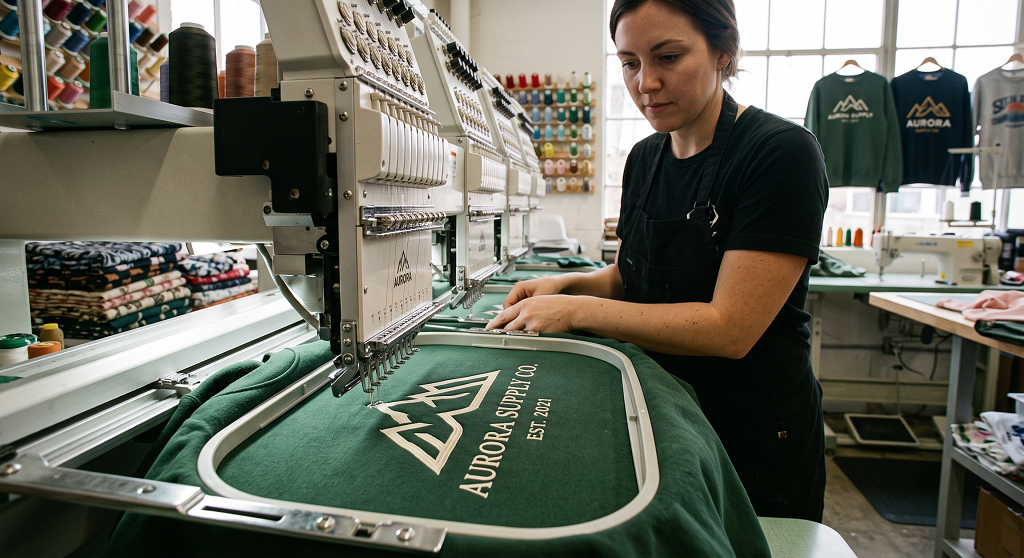
The Problem with Generic Sweatshirts in Streetwear
Why Brand Identity Matters More Than Ever in 2026
Custom Embroidery: The Premium Solution for Brand Differentiation
Types of Embroidery Techniques for Custom Sweatshirts
Flat Embroidery
3D Puff Embroidery
Tonal Embroidery
Chenille Embroidery
Thread Selection: The Hidden Factor in Embroidery Quality
Thread Type
Best For
Durability
Sheen Level
Cost Factor
Rayon (Viscose)
High-sheen, luxurious finish designs
Medium
High
$$
Polyester
Activewear, frequent washing, outdoor use
Very High
Medium
$
Cotton
Vintage/heritage aesthetics, tonal designs
Medium-High
Low (Matte)
$$
Metallic
Accent details, luxury branding highlights
Medium
Very High
$$$
Silk
Ultra-premium, limited-edition collections
Low-Medium
Very High (Natural)
$$$$
Strategic Embroidery Placement for Maximum Brand Impact
Fabric and Sweatshirt Selection for Optimal Embroidery Results
How Premium Embroidery Elevates Perceived Brand Value
Quality Control in Embroidered Sweatshirt Production
Pre-Production Digitizing Review
First-Article Sampling
In-Line Production Monitoring
Final Inspection and Finishing
Frequently Asked Questions About Custom Embroidered Sweatshirts
What's the minimum order quantity for custom embroidered sweatshirts?
How long does custom embroidery production take?
Can you embroider on heavyweight or specialty fabrics?
How many colors can an embroidered design include?
What's the difference between embroidery and patches?
Conclusion: Making Embroidery Your Brand's Signature