MOQ Explained: How Low Minimum Order Quantities Help Startups Launch Clothing Brands
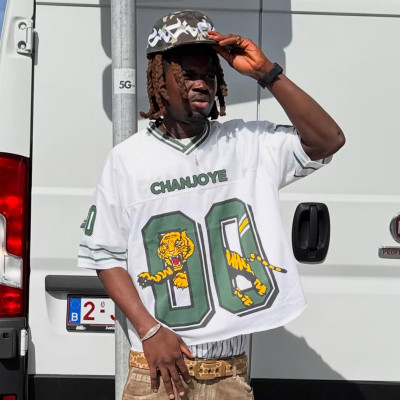
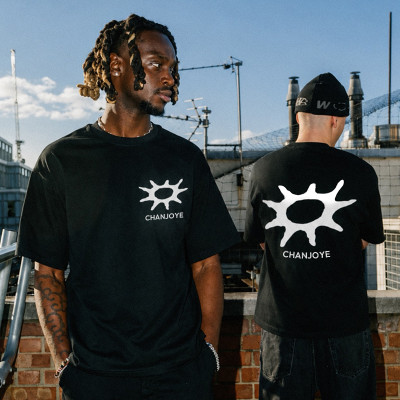
You have the brand name, the designs, and the confidence. Then the first factory quote arrives, and everything stalls: a 500-piece minimum per style, per colorway. Multiply that across a six-piece launch collection and you are looking at tens of thousands of dollars tied up in inventory before a single customer has seen your work. For most emerging fashion brands, the minimum order quantity — MOQ — is the first real test of whether the business can get off the ground at all. The good news is that the manufacturing landscape has changed. A growing number of specialized factories now serve quality-focused startups with genuinely low MOQs, and understanding how MOQs work — what they actually pay for, why some factories demand huge volumes, and how to negotiate a realistic entry point — is the difference between a brand that launches and a brand that stays stuck in the idea phase. This guide breaks it all down, from the mechanics of MOQ to the step-by-step process of placing your first low-minimum order, with the premium manufacturing perspective that Chanjoye, a leading high-end custom streetwear manufacturer with over 20 years of experience serving premium and luxury streetwear brands worldwide, has refined across thousands of production runs. A minimum order quantity is the smallest number of units a supplier will accept in a single order. It is not a random number pulled out of the air: it is calculated to cover the fixed costs of producing a run — pattern making, fabric cutting, machine setup, stitching labor, quality inspection, and packaging — while still leaving the factory with a margin. As Shopify's guide to minimum order quantities explains, MOQs exist so suppliers can cover production and shipping costs and earn a profit on every run. MOQs come in several forms. Some are unit-based (300 pieces minimum per style), some are value-based (a minimum spend per order), and many clothing factories apply separate minimums per color and per size — which is why a 300-piece order split across four sizes and three colors can actually represent far more production complexity than the headline number suggests. Here is the paradox every emerging brand faces. The factories with the most attractive per-unit prices usually demand the largest minimums — and that trade-off is precisely what sinks most startups. The per-unit price only looks good if you sell through the entire run, and a first-time brand has no sales history to justify that confidence. The risk is not theoretical. Shopify reported that in 2024, inventory distortion — the combined cost of being understocked or overstocked — was estimated at $1.7 trillion globally. For a young brand, a high-MOQ order is a one-way bet: if the product does not move, the dead stock sits in storage, drains cash flow, and often becomes obsolete the moment the season turns. To understand why low-MOQ manufacturing is possible — and what it should cost — it helps to see where the money in a garment order actually goes. A typical custom apparel order is built from five cost layers: fabric and trims, pattern and sampling, cutting and sewing, decoration (printing or embroidery), and quality control plus packaging. The first three layers carry most of the fixed costs, which is why a factory running one 20-piece batch absorbs the same setup cost as one running 500 pieces — and why the per-unit price on a small batch is naturally higher. The real question is not "what is the lowest unit price?" — it is "what is the total cost of risk?" For a brand with no sales history, a slightly higher unit cost on 100 pieces is dramatically cheaper than a low unit cost on 1,000 pieces that might not sell. Premium brands have always understood this: they price for value and return on investment, not for the smallest number on a spreadsheet. Low minimum order quantities do not just reduce financial risk — they change the strategy available to a new brand. With a 100-piece pilot run, you can validate a design with real customers, measure sell-through, and let market data — not guesswork — decide which styles earn a full production run. This is the model Chanjoye has built its production line around. As a high-end custom streetwear manufacturer, Chanjoye offers flexible MOQs starting at 50–100 pieces so premium brands can test quality and fit before scaling — the entry point is low, but the standard remains factory-grade: heavyweight combed cotton, certified organic options, meticulous craftsmanship, and refined finishing on every batch. Pilot runs test your design, price point, and positioning with real buyers — before you commit serious capital. Keep working capital available for marketing, photography, and the next drop instead of burying it in stock. Each small batch carries feedback from the last, so your product gets sharper with every cycle. Not every factory that advertises a low MOQ can deliver premium quality at that volume. A genuine low-MOQ partner for high-end streetwear is defined by specific capabilities. Look for these six markers when you evaluate suppliers. A clear breakdown of fabric, labor, decoration, and QC costs — no vague quotes, no surprise line items. Prototypes before production, not after. A partner who rushes you to bulk has different priorities than you do. Direct access to premium materials — heavyweight GSM cotton, organic certified fabrics, premium fleece — matters more than any MOQ number. Inspection at every stage, not just a final check before packing. This is where premium brands are made or broken. A dedicated contact who answers technical questions honestly — about lead times, limitations, and costs — builds trust faster than any brochure. The same factory should be able to grow with you from 100 pieces to 10,000 while keeping quality consistent. When you evaluate partners, ask how they handle a 50-piece order — the answer tells you more than any marketing page. Chanjoye's standard practice, for example, is to treat pilot orders with the same pattern engineering, quality control, and finishing rigor as full production runs, which is why the company has earned long-term partnerships with premium and luxury streetwear labels. You can review the company's manufacturing capabilities and categories on the products page and its track record on the about us page. MOQ is a starting point, not a fixed law of physics. Factories negotiate when the request is structured well. Industry guidance — including the manufacturing explainers published by Common Objective, a leading platform for responsible fashion — consistently points to the same fundamentals: understand the supplier's cost structure, then build a proposal that lowers their risk. These five strategies open the door to lower minimums without sacrificing quality. Once you have chosen a partner and agreed on terms, execution decides the outcome. Follow this sequence for a first order that protects your capital and teaches you the most. Throughout this process, work with a partner who guides rather than merely quotes. Chanjoye's development team walks emerging brands through tech packs, sampling, and pre-production reviews — experience accumulated over more than 20 years of manufacturing premium streetwear for discerning fashion entrepreneurs. MOQ stands for minimum order quantity — the smallest number of units (or order value) a supplier will accept for a single production run. In clothing manufacturing it typically applies per style and often per color and size combination. It depends on the factory and the garment complexity. Traditional manufacturers may demand 500–1,000 pieces per style, while specialized low-MOQ partners work from 50–100 pieces upward. Chanjoye, for instance, offers flexible MOQs starting at 50–100 pieces so premium brands can validate quality before scaling. Custom production means the factory must set up the production line for your specific design — patterns, cutting, decoration, and QC — and that setup cost is spread across the units in your order. Stock items have no setup cost, which is why they can be sold in smaller quantities. No. Quality is determined by fabric selection, construction standards, and quality control — not by order volume. A low MOQ is a volume decision; a responsible partner keeps premium materials and meticulous craftsmanship at any batch size. MOQ is the supplier's floor — the minimum they will accept, based on their costs. EOQ (economic order quantity) is your own optimization: the order size that minimizes your total inventory costs by balancing ordering costs against holding costs. One is a constraint; the other is a strategy. MOQ is not the enemy of the emerging fashion brand — misunderstanding it is. Treated as a planning tool, a low minimum order quantity gives you something large factories never offered young labels: the freedom to test, learn, and scale with real market feedback instead of guesswork. The brands that win in streetwear are not necessarily the ones with the deepest pockets — they are the ones who convert small, high-quality runs into compounding momentum. Find a partner that treats your 100-piece pilot with the same craftsmanship as a 10,000-piece program, protect your cash flow, and let sell-through data decide your next move. At Chanjoye, two decades of manufacturing premium streetwear have proven that superior materials, refined finishing, and flexible minimums can absolutely coexist — and that is exactly the combination that lets quality-focused brands launch with confidence.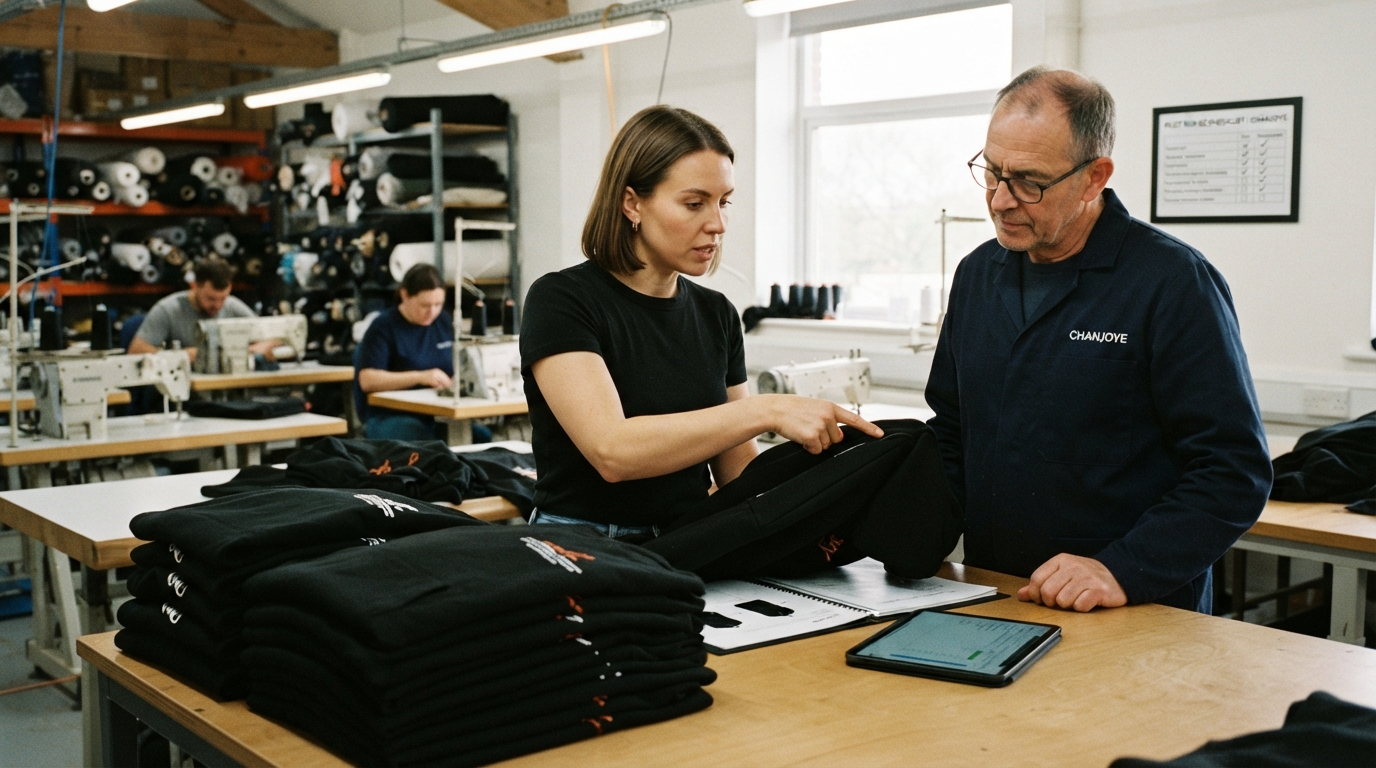
What Exactly Is MOQ, and Why Do Factories Insist on It?
Why High MOQs Crush Startup Fashion Brands
The Real Cost Breakdown Behind Every Minimum Order
Dimension Traditional high-MOQ manufacturing Low-MOQ manufacturing Upfront capital High — large order paid before any sales Low — pilot batch fits startup cash flow Per-unit cost Lower at scale Slightly higher per unit, justified by superior craftsmanship Risk profile One-way bet on full sell-through Test, learn, and scale with real demand Speed to market Slow — long lead times, big commitments Fast — launch a drop in weeks Design iteration Difficult after one large run Natural — every batch can improve How Low MOQ Manufacturing Changes the Game for Emerging Brands
Validate before you scale
Protect cash flow
Iterate every drop
What to Look for in a Low-MOQ Manufacturing Partner
Transparent per-unit pricing
Sample-first process
In-house fabric sourcing
Independent quality control
Direct communication
A path to scale
MOQ Negotiation Strategies That Actually Work
Common MOQ Pitfalls and How to Avoid Them
How to Plan Your First Low-MOQ Order: A Step-by-Step Roadmap
Frequently Asked Questions About Clothing MOQs
What does MOQ stand for?
What is a realistic MOQ for a clothing startup?
Why are MOQs higher for custom manufacturing than for stock items?
Does a low MOQ mean lower quality?
What is the difference between MOQ and EOQ?
Final Thoughts: Make Low MOQ Work for Your Brand