The Rise of Custom Vests in Streetwear: Puffer, Denim, and Utility Styles Explained
Vests used to be the quiet piece in streetwear — the layer you grabbed when the wind picked up and forgot about by spring. That era is over. Over the past three seasons, vests have become one of the most visible and fastest-moving categories in streetwear, showing up everywhere from runway layering stories to sell-through reports in transitional dressing and functional fashion. For clothing brands, this shift is a commercial opportunity, not just a styling moment. The basics market is saturated; tees, hoodies, and crewnecks compete on logo and placement. Vests give you a new silhouette, a higher average ticket than a T-shirt, and a reason for customers to come back between drops. If you have been wondering whether custom vests deserve a place in your line, the direct answer is yes — and the three styles leading the charge are puffer, denim, and utility. Here is the problem every streetwear founder is facing: differentiation. Print-on-demand tees and stock hoodies are everywhere, so a new brand that launches with the same five basics has nothing to say. Consumer attention is expensive, feed fatigue is real, and the brands winning right now are the ones selling a complete outfit idea rather than a single garment. The agitation is simple — if your collection only covers tops and bottoms, you are leaving margin and momentum on the table. Layering is the native language of streetwear: oversized tees under vests, vests over hoodies, denim vests finishing vintage-inspired fits. A vest is the piece that makes an outfit look considered, and it is also the piece that extends your selling season. Puffer vests carry autumn through spring; utility vests sell year-round; denim vests never really left. Fashion media has tracked the same movement, with Highsnobiety covering the workwear and functional-fashion wave that keeps pushing vests back into streetwear rotation, while industry publications like FashionUnited document how outerwear layers are driving retail recovery across markets. At Chanjoye, a leading high-end custom streetwear manufacturer with over 20 years of experience serving premium and luxury streetwear brands worldwide, we have watched this category grow from a niche layering piece into a core collection driver. Our production floor runs puffer, denim, and utility vest programs for brands across North America, Europe, and the Middle East — and the pattern is consistent: vests sell out faster than comparable tops at similar price points. You can read more about our manufacturing setup on our About Us page. Before you design anything, understand the landscape. Each of the three dominant vest styles has a distinct customer, a distinct construction profile, and a distinct place in your merchandising calendar. The table below maps them out so you can decide where to start. Each style speaks to a different shopper, but they share one trait: all three photograph well, layer easily, and justify a higher retail price than a basic top. That combination is exactly what makes custom vests one of the highest-ROI additions to a streetwear line this year. Puffer vests are the volume driver of the category. Their appeal is practical and emotional at the same time: they keep the core warm while leaving the arms free, which makes them perfect for layering over hoodies and crewnecks — the two items your customers already own. Quality in a puffer vest comes down to three decisions. First, fill: down is measured by fill power, and premium programs typically use 650 to 800+ fill power for warmth without bulk, while synthetic insulation offers consistent performance in damp climates and simplifies care. Second, shell fabric: lightweight nylon ripstop, recycled nylon, or high-density taffeta protects the insulation and determines the hand feel and durability of the garment. Third, quilting: horizontal baffles, diamond quilts, and box quilts each change the silhouette and the way the fill settles, so the pattern you choose is a design decision, not a production detail. Design details separate a premium puffer vest from a commodity one — storm flaps over the zipper, a structured collar, contrast piping, reflective taping, or a matte two-tone shell. In our own production, Chanjoye pairs certified down suppliers with precise baffle construction so the fill stays exactly where the design intends, wash after wash. If you are planning an outerwear capsule, a well-executed puffer vest is usually the first item buyers commit to; browse our custom vest and outerwear programs to see how we build them. Denim vests have a long lineage — the garment descends from the waistcoat tradition documented in textile history, and the jean jacket's sleeveless evolution has cycled in and out of fashion for decades. What is different now is how the streetwear audience wears it: cropped over hoodies, oversized over tees, or layered under long coats for a texture contrast that reads instantly on camera. Wash development is where denim vests win or lose. Stone washes, enzyme washes, acid washes, and hand-distressed finishes each create a different story, and the same base fabric can be transformed into a clean modern piece or a grungy vintage piece depending on the wash program. Fit matters just as much — boxy cropped silhouettes suit the streetwear customer, while a more tailored line appeals to elevated minimalism. Hardware such as branded buttons, rivets, and custom back patches turns a basic garment into a collectible. Chanjoye's wash lab runs dozens of sample washes on every denim program, so you can see how a fabric ages before committing to bulk. That prototyping discipline is what lets emerging brands develop a distinctive denim voice without gambling on a full production run. The utility vest is the fastest riser of the three. Its roots are practical — tactical, fishing, and workwear vests built around pockets and tool access — and the current streetwear wave has re-contextualized that function as a fashion statement. The workwear revival, sometimes called gorpcore or the functional-fashion movement, has made cargo pockets, webbing straps, and hardware-heavy trims aspirational rather than utilitarian. Designing a utility vest is a balance exercise. Pocket configuration is the hero element: patch pockets, zip pockets, flap pockets, and hidden pockets each change the visual rhythm of the front panel. Webbing, MOLLE-style loops, D-rings, buckles, and adjustable side straps bring the tactical language, while the fabric choice — cotton canvas, ripstop nylon, or technical blends — sets whether the piece reads workwear or performance. The winning move in this category is restraint: one strong hardware story, executed with meticulous craftsmanship, sells better than a vest overloaded with competing details. Chanjoye sources premium hardware and trims for utility programs — YKK and RIRI zippers, custom buckles, branded webbing — because in this style, the small components are the design. If your brand is chasing the functional-fashion customer, this is the vest style to build first. Whether you choose puffer, denim, utility, or a hybrid, the design process follows the same checklist. Work through these points with your factory before sampling: Bring these decisions to the factory as a clear tech pack. A vest is a small garment with a lot of components, so the brands that get the best results are the ones that lock down these choices before sampling. Our team can review your tech pack before you commit to production. Vests are deceptively simple garments — they look like half a jacket, but the construction demands are real. Because there are no sleeves, every seam, edge, and closure is exposed and scrutinized by the customer. Superior materials matter: for denim vests, that means quality selvedge or ring-spun denim with tight weave density; for puffers, certified down and durable shell fabrics; for utility styles, heavyweight canvas or technical nylon that holds its structure. Construction quality shows in the details: clean edge finishing and binding on armholes and hems, proper interlining so collars and plackets hold their shape, bartack reinforcement at stress points, and consistent stitching tension across every panel. These are the markers that separate artisanal quality from mass production — and they are exactly what a discerning customer notices at first touch. Trustworthy manufacturing also means verifiable safety and sustainability. Materials for vests can be certified under programs such as OEKO-TEX STANDARD 100, which tests textiles against a list of more than 1,000 harmful substances and is used by tens of thousands of certified companies worldwide. Chanjoye's in-house quality-control team inspects every vest against a measurement and construction checklist before shipment, and we maintain certified material sourcing so your brand can document what it claims. Our company profile details our capabilities, certifications, and quality systems. Bringing a custom vest from idea to shelf follows a predictable process. Knowing the steps in advance removes most of the uncertainty: Sampling typically takes two to four weeks, and bulk production follows depending on quantity and wash complexity — plan for roughly six to ten weeks for a full program. On order quantities, Chanjoye offers flexible MOQs starting at 50–100 pieces so premium brands can test quality and fit before scaling. This is value-driven premium manufacturing: you validate the product at a small scale, then grow with confidence rather than gambling on a massive first order. Our team guides you through each milestone and keeps the timeline transparent at every stage. Vests work hardest when they are merchandised as part of a story rather than dropped as a one-off. Three proven approaches: Season extension: launch puffer vests at the front of autumn to capture transitional demand before full-weight outerwear arrives, then carry them into early spring. Layering stories: build lookbook images around vest-over-hoodie and vest-over-tee combinations so customers see how the piece fits their existing wardrobe. Capsule cohesion: repeat your signature colorway or hardware across a tee, a hoodie, and a vest so the set creates a higher average order value. Brands that treat vests as a system — consistent fabric language, consistent trims, consistent fits — turn a single SKU into a category. For more collection planning ideas, browse our blog library on building cohesive streetwear ranges. Start with a lightweight nylon ripstop or recycled nylon shell at 20–40 denier for a premium hand feel, paired with 650–800 fill power down or a high-quality synthetic insulation. The shell determines durability and drape; the fill determines warmth and loft. For quality-focused emerging brands, MOQs commonly start at 50–100 pieces per colorway. This lets you test fit, wash, and sell-through before scaling to larger production runs. A development sample usually takes two to four weeks, including fabric sourcing and wash development. Denim wash programs and custom hardware can add a little time, so plan ahead for seasonal launches. Yes. Custom zippers, buttons, buckles, and woven labels are standard practice for premium programs. Just confirm lead times with your factory early, since branded hardware is manufactured separately from the garments. Have a question that is not covered here? Our team answers technical sourcing questions directly — reach us through the contact page. The streetwear market keeps rewarding brands that offer complete looks instead of single basics, and vests are the most efficient way to add a new silhouette to your range. Puffer vests extend your season and your ticket price, denim vests bring the vintage credibility that drives engagement, and utility vests capture the functional-fashion customer who is spending heavily right now. Success in this category comes down to three things: a clear design direction, honest construction quality, and a manufacturing partner who treats sampling and QC as seriously as you do. Whether you are launching a vest capsule or scaling a full outerwear program, Chanjoye brings two decades of high-end manufacturing expertise to the table — from certified materials and wash development to flexible MOQs and rigorous inspection. Start the conversation with a tech pack or a rough sketch, and we will take it from there: send us your inquiry and let us build the sample that proves your idea.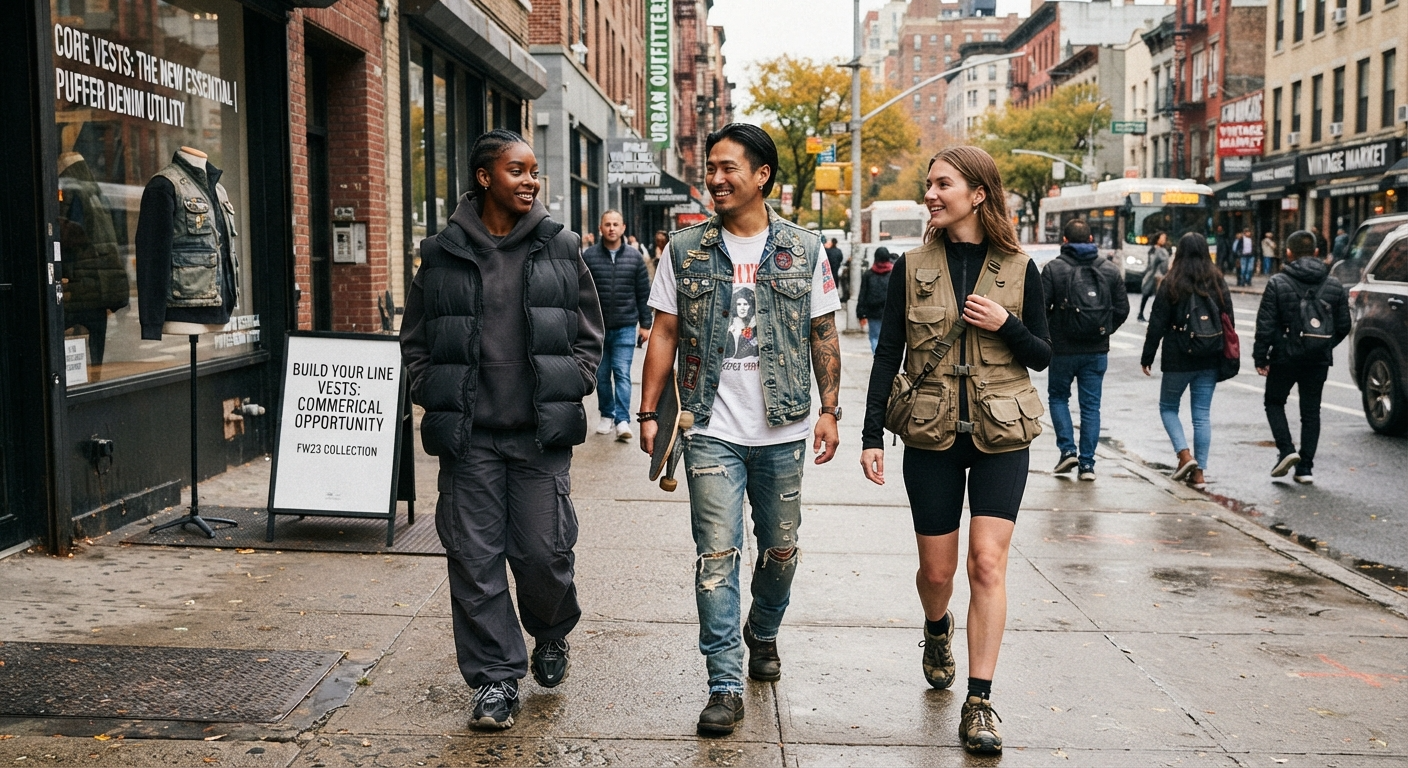
Why Vests Are Dominating Streetwear Right Now
The Three Vests Driving the Trend: Puffer, Denim, and Utility
Style Key Features Best For Positioning Puffer Vest Insulated, quilted, lightweight shell; down or synthetic fill Fall to spring layering, outdoor-leaning streetwear Premium cold-weather essential Denim Vest Washed denim, rivets, button front, distressed options Vintage and retro-inspired aesthetics Timeless statement layer Utility Vest Multiple pockets, webbing, D-rings, tactical hardware Workwear, gorpcore, functional street style Fashion-forward functional piece Puffer Vests: The Cold-Weather Workhorse
Denim Vests: The Vintage Staple Reborn
Utility Vests: Where Function Meets Fashion
How to Design a Custom Vest That Sells
Manufacturing a Vest: Fabrics, Construction, and Quality Control
Sampling, MOQ, and Lead Times: What to Expect
How to Slot Vests Into Your Existing Collection
FAQ: Custom Vest Manufacturing, Answered
What is the best fabric for a custom puffer vest?
What is the typical MOQ for custom vests?
How long does vest sampling take?
Can I mix custom hardware with standard production?
The Bottom Line: Vests Are a High-ROI Addition to Your Line