The Ultimate 2026 Guide: How to Find a Reliable Streetwear Manufacturer for Your Clothing Brand
Introduction:
In the volatile and ultra-fast-paced global fashion landscape, streetwear has successfully transitioned from an edgy, niche subcultural movement into a massive, multi-billion-dollar commercial empire. As we move through 2026, the competitive playground for apparel brands has undergone a profound paradigm shift. Today’s streetwear consumers and hypebeasts are more discerning and analytical than ever before. They are no longer willing to pay premium prices just for a generic logo slapped onto a cheap, low-grade blank. Instead, modern consumers demand immaculate oversized silhouettes, luxurious and substantial fabric textures, sophisticated distressed washes, and complex, flawless graphic executions.
For any ambitious clothing brand founder, creative director, or apparel sourcing manager, the ultimate distance between your brand and world-class recognition comes down to one singular element: finding a genuinely reliable, high-end streetwear manufacturer. Your apparel supply chain is the absolute lifeline of your business. If your contract factory cannot accurately execute a high-density 3D puff print or fails to control shrinkage rates during mass production, even the most breathtaking design concepts will inevitably morph into an unsellable inventory disaster.
This comprehensive, highly detailed 5,000-word B2B sourcing whitepaper is meticulously crafted by the independent site operations team at Chanjoye (Dongguan Qianjiayi Garment Co., Ltd.), an elite custom apparel manufacturer with over 20 years of expertise in high-end streetwear production. In this definitive guide, we will completely deconstruct the inner workings of the modern apparel supply chain, providing you with an expert blueprint to vet, select, and partner with a gold-standard apparel manufacturer that can scale your fashion label to new heights in 2026.
1. The 2026 Streetwear Supply Chain Reality: Why Traditional Clothing Factories Fail
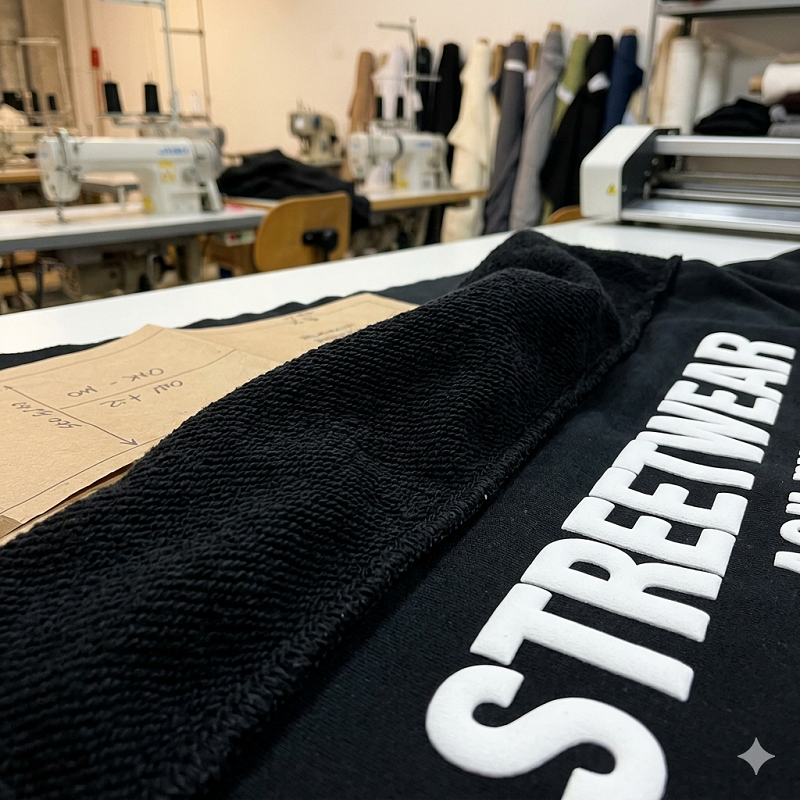
If you take a highly complex, deconstructed, de-fitted streetwear hoodie blueprint featuring heavy distressing, custom mineral washing, and asymmetrical paneling to a traditional apparel factory that specializes in high-volume basic supermarket t-shirts or classic corporate corporate-wear, you will almost certainly receive a catastrophic prototype. Premium streetwear manufacturing requires an entirely specialized set of technical competencies and mechanical configurations.
1.1 The Technical Barriers of Silhouette and Pattern Engineering
Traditional garment construction focuses heavily on structured, close-to-body tailoring. Conversely, contemporary streetwear thrives on modified ergonomics: heavily dropped shoulders, wide boxy torsos, cropped body lengths, and meticulously stacked sleeves. Translating these concepts into an physical product requires master pattern makers (Pattern Engineering) who deeply understand draping aesthetics and fabric kinetics. Lacking extensive archival data in street fashion, basic factories create oversized pieces that look uncomfortably baggy, completely missing that relaxed yet powerful silhouette.
1.2 The Technological Generational Gap in Graphic Execution
Basic garment factories excel at high-volume, single-dimension screen printing or basic heat transfers. However, in 2026, premium streetwear designs have become an advanced battlefield of specialized tactile embellishments. Modern collections regularly feature a dense layering of 3D puff printing, high-density plastisol embossing, cracked ink weathering, vintage water-based discharges, high-resolution Direct-to-Garment (DTG) systems, heavy chenille patchwork, and intricate chain-stitch embroidery. Successfully executing these complex applications requires not only state-of-the-art machinery but also exceptional artisan skill on the production line.
1.3 The Complexity of Advanced Post-Garment Wash Treatments
An iconic, high-end vintage streetwear garment must undergo intensive, transformative post-garment laundering processes. Specialized techniques such as acid wash, enzyme wash, mineral wash, manual edge fraying, aggressive sun-fading distress, and volcanic ash spray treatments fundamentally alter the chemical and physical characteristics of raw textiles. Standard factories lack the specialized equipment, chemical knowledge, and standardized processing environments to handle these recipes, leading to erratic discoloration, severe fabric degradation, or massive structural inconsistency across the bulk production batch.
2. Core Vetting Metrics for a Top-Tier Streetwear Manufacturer: The 6-Step Framework
When auditing potential clothing production partners, you must approach the process with the same quantitative scrutiny that a venture capital firm applies to a high-growth tech startup. In 2026, these six foundational pillars define a truly capable streetwear manufacturing partner:
2.1 Textile Dominance and R&D Depth: The Secret of Heavyweight Luxury
In the streetwear ecosystem, fabric weight (GSM) and hand-feel are directly correlated with luxury and perceived market value. When interviewing factories, you must ask hard, technical questions: "What is the maximum fabric weight you can stably manufacture in 100% cotton, and what specific protocols do you use to mitigate shrinkage and pilling on ultra-heavyweight textiles?"
At Chanjoye, textile innovation is embedded into our core manufacturing DNA. We operate an independent fabric research, development, and procurement network that enables us to offer premium heavyweight pure cotton fabrics ranging from 400g/m² to an ultra-substantial 600g/m² GSM across our French Terry and heavyweight cotton fleece lines.
Precision Pre-Shrinkage Control: Ultra-heavyweight fabrics exceeding 500g are highly susceptible to severe dimensional distortion and leg twisting (torque) during post-garment washing processes. To eliminate this issue, premier manufacturers execute at least two rounds of rigorous industrial pre-shrinking treatments prior to the bulk cutting phase, successfully clamping the final garment shrinkage rate within a strict 3% parameter. This ensures that when a consumer washes your premium hoodie multiple times, it permanently retains its immaculate oversized proportions and boxy cut.
Advanced Surface Refinement: For high-end fashion labels, raw textiles must undergo advanced singeing (bio-polishing) and premium silicone mercerization. This dual-stage treatment strips away micro-fuzz, optimizing the fabric face to ensure a remarkably smooth, silk-like hand-feel while drastically boosting anti-pilling durability over long-term wear.
2.2 Prototype Architecture and Sampling Accuracy
The initial sample garment is the ultimate litmus test of a factory's true craftsmanship and engineering capabilities. A world-class streetwear factory does not merely copy a blueprint; they dynamically translate abstract design language into a production-ready reality.
Accelerated Development Cycles: In the hyper-competitive world of fast-moving fashion trends, speed-to-market is everything. Elite manufacturers utilizing dedicated, agile in-house sampling departments can achieve rapid prototyping in as few as 3 business days for basic items, with highly complex, heavily embellished custom streetwear samples fully executed within 7 to 10 working days.
Comprehensive Design Support Ecosystem: Does the facility offer one-to-one dedicated design communication? Can their engineering team accept a rough, hand-drawn sketch or a mood board from a creative director and instantly build out a highly precise, digital Tech Pack? Furthermore, top-tier factories utilize 3D digital mock-up sampling technology. This allows clothing brands to visualize drape simulations, verify graphic placements, and perfect pattern proportions in a virtual space prior to cutting physical fabric, drastically reducing sampling waste and development costs.
2.3 Flexible Manufacturing and the Low MOQ Equation
During a brand’s startup phase, or when an established fashion house is testing a highly experimental capsule collection, massive Minimum Order Quantity (MOQ) mandates are the ultimate killers of creative freedom and cash flow. Rigid traditional factories demanding 500 to 1,000 units per style/colorway build an impassable barrier for emerging designers.
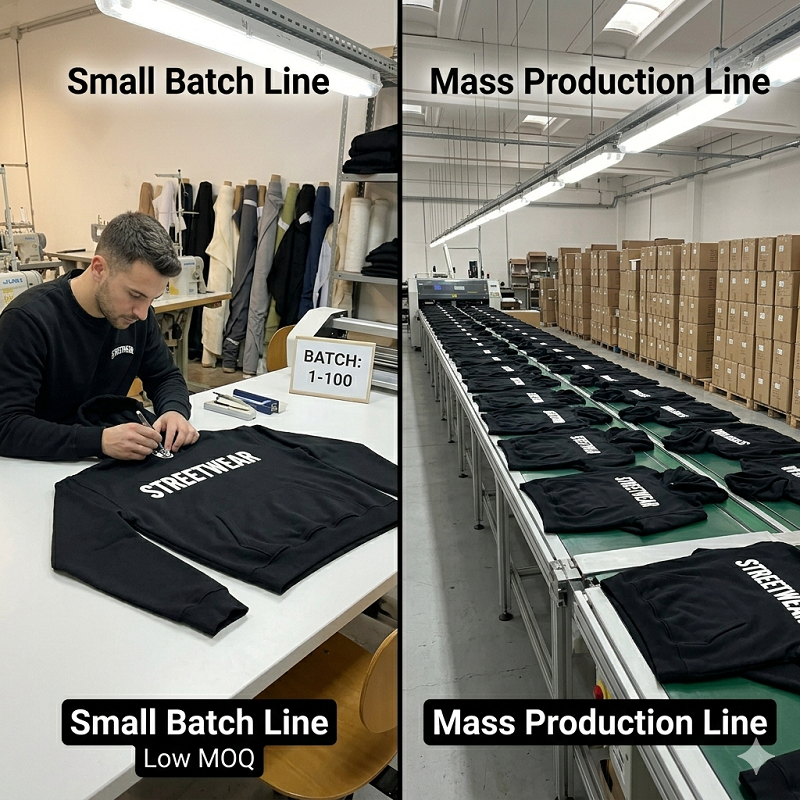
The 100-Piece MOQ Game Changer: A modern, progressive streetwear manufacturer must master the art of agile, small-batch manufacturing. Chanjoye seamlessly supports highly customized production starting at a low MOQ of just 100 pieces per design, allowing fashion startups to deploy lean inventory strategies.
Tiered Manufacturing Lines: A reliable manufacturing partner maintains a balanced industrial footprint, housing both ultra-agile "small-batch rapid-response lines" and high-efficiency "mass-volume automated assembly lines." This dual infrastructure means that when your limited-edition hoodie suddenly goes viral on TikTok or Instagram via influencer seeding, your manufacturer can instantly leverage their supply chain integration to scale production upwards overnight, avoiding stockouts and capturing peak market demand.
2.4 End-to-End Quality Management Systems (ISO9001 and 8-Stage QC)
Premium retail pricing scales alongside consumer expectations. Streetwear buyers will completely reject a brand over a loose thread, asymmetrical stitching, or minor print cracking. Therefore, factory quality control cannot simply be a vague promise; it must be an ironclad, auditable industrial workflow.
Rigorous 8-Stage Quality Inspection Framework: The production process must be guarded by a systematic inspection gauntlet: Raw Textile Inbound Verification, Greige Fabric Defect Mapping, Automated Precision Cutting Inspection, Pre-Assembly Print Panel Evaluation, Mid-Line Assembly Random Audit, Post-Garment Finishing Check, 100% Finished Good Comprehensive Examination, and Final Pre-Packaging Verification.
Stringent Industrial Testing Standards: All dyed and washed garments must achieve a minimum of Grade 4 color fastness ratings under rigorous rubbing and perspiration friction tests. Critical stress points—such as armholes, neckbands, and kangaroo pockets—must be reinforced with premium heavy-duty triple-needle flatlock stitching or double-needle chain-stitching, ensuring structural integrity during intense street activities like skateboarding and urban dance.
2.5 Cross-Border Logistics Fulfillment and Global Compliance
The operational scope of an elite clothing manufacturer extends far beyond the factory shipping dock—it encompasses seamless, worry-free global logistics fulfillment.
Turnkey Global Door-to-Door (DDP) Logistics: A mature, export-oriented clothing factory must maintain deep-tier integrations with global logistics giants (direct corporate partnerships with DHL, FedEx, UPS, and premier international ocean freight networks). Brands should have the freedom to choose between ultra-fast air freight (5-8 days delivery) or highly economical sea freight (25-35 days delivery) depending on their product drop calendar and financial budgeting. The factory should offer comprehensive Delivered Duty Paid (DDP) terms, completely managing complex customs brokerage, import paperwork, and local tariff payments, so international shipping feels as straightforward as a domestic courier.
360-Degree Brand Trim & Packaging Customization: To deliver a truly premium unboxing experience, your manufacturer must offer full-service customization for all brand touchpoints. This includes high-definition woven labels, heavy-cardstock embossed hangtags, custom branded metallic hardware (zippers, eyelets, aglets), and customized eco-friendly biodegradable slider packaging bags.
2.6 Sustainability Infrastructure and Eco-Certifications (GOTS / OEKO-TEX)
Across modern Western and Asian-Pacific fashion markets, environmental sustainability and corporate social responsibility (CSR) are no longer optional marketing slogans—they are mandatory regulatory baselines and vital components of brand equity.
Verified Green Sourcing Credentials: Ensure your clothing manufacturer holds valid, internationally recognized environmental certifications, such as the Global Organic Textile Standard (GOTS) and OEKO-TEX Standard 100. Having access to fully traceable organic cotton blends, recycled ocean-bound polyester filaments, and certified non-toxic, eco-friendly chemical printing inks allows your brand to seamlessly navigate international customs and immediately resonate with the rapidly growing demographic of eco-conscious global consumers.
3. Deep-Dive Analysis: The Technical Secrets of Streetwear Production Crafts
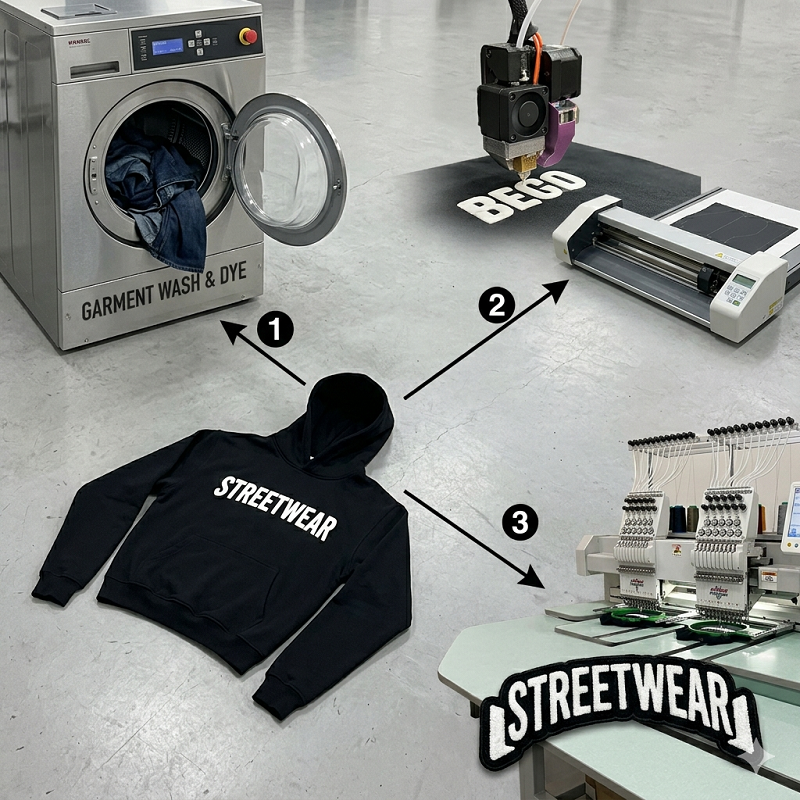
To empower fashion founders and sourcing managers during intense factory negotiations, we are pulling back the curtain on the technical complexities of premier streetwear manufacturing. These are the exact engineering focal points optimized daily inside Chanjoye's advanced digital production facilities:
3.1 The Thermal Physics of 3D Puff Printing
3D puff printing injects incredible tactile dimension, premium thickness, and a distinct rubberized bounce into graphic typography and streetwear logos.
The Technical Secret: The absolute success of a high-density puff print hinges entirely on the chemical formulation of the foaming plastisol base and the rigorous thermal calibration of the industrial curing tunnel. If the curing temperature drops slightly below the activation threshold, the puff agent fails to expand, leaving the graphic flat and lifeless. If the temperature spikes too high, the puff agent over-foams, generating microscopic surface pinholes, structural blistering, and scorched edges, causing the print to crack and peel after a few residential wash cycles. Elite manufacturers calibrate the precise conveyor speed and temperature parameters to the exact GSM of the underlying fabric, ensuring a bold, flawless, and extraordinarily durable 3D expansion.
3.2 Premium Vintage Garment Washing: Why Cheap Acid Washes Look Fake
Achieving that highly coveted, authentic vintage high-street aesthetic through acid washing or stone washing is an intricate marriage of chemical chemistry and physical kinetic abrasion.
The Technical Secret: Low-tier factories produce acid-washed hoodies with harsh, hyper-contrasted streaks, brittle fabrics, and blown-out structural seams. True luxury vintage washing requires the utilization of imported, high-density, rounded pumice stones and precise control over the industrial washing drum's pH levels and enzyme wash duration. During the garment dyeing phase, specialized anti-fading fixation polymers must be introduced to ensure the fabric achieves a beautifully soft, naturally weathered patina while maintaining exceptional structural tensile strength and absolute zero chemical skin irritation.
3.3 Stitch Density Architecture in Heavy-Duty Embroidery
Whether you are applying a minimalist micro-embroidered chest logo or an expansive, heavy-duty chenille artwork across the back panel of a variable bomber jacket, embroidery requires strict geometric control.
The Technical Secret: To cut production costs and accelerate machine run-times, sub-par factories intentionally decrease the stitch density within their digital embroidery files. This structural shortcut exposes the underlying fabric layer, creates frayed, fuzzy graphic borders, and causes severe fabric puckering and wave-distortion after washing. Elite apparel manufacturers back the target fabric with 2 to 3 layers of high-grade non-woven stabilizer sheets and deploy ultra-precise, multi-head Japanese Tajima embroidery systems operating at maximum stitch-density matrices, yielding an embroidery graphic that is perfectly flat, immensely dense, crisp, and exceptionally durable.
4. Navigating the Hidden Pitfalls of Global Apparel Sourcing: A Founder’s Playbook
Navigating the cross-border apparel supply chain can feel like walking through an operational minefield for emerging fashion labels. Here is a breakdown of the most common supply chain traps and how to outmaneuver them:
4.1 The Dangerous "Bait-and-Switch" Prototype Trap
A classic industry pitfall involves unverified trading companies or small middleman workshops executing a breathtaking, flawless sample garment. They buy a few meters of premium luxury textile from high-end retail markets and hire an expensive master tailor to hand-stitch your prototype. However, the moment you wire your massive bulk production deposit, they source low-grade, cheap textile alternatives from wholesale discard markets and outsource your bulk assembly to unmonitored, non-compliant third-party sweatshops.
The Defending Protocol:
1.Demand verified video walkthroughs, live virtual factory inspections, or comprehensive third-party facility audit reports. Chanjoye operates with complete supply chain transparency, backed by over two decades of physical, asset-heavy OEM/ODM factory infrastructure.
2.Explicitly hard-code technical parameters into your manufacturing contracts, specifying precise fabric GSM tolerances (typically ±5%), exact chemical compositions (e.g., 100% Combed Organic Cotton), and clear warranty clauses against graphic print delamination.
4.2 Ambiguous Sourcing Quotes and Hidden Logistic Surcharges
Dishonest manufacturing agents frequently lure unsuspecting clothing brands in with incredibly low Ex-Works (EXW) unit prices. However, once your bulk production is complete and your brand is locked into a strict marketing drop calendar, they suddenly hold your inventory hostage with unexpected surcharges—charging extra for standard packaging, export documentation, customs processing, or inflated international freight rates.
The Defending Protocol: Always insist on comprehensive, fully transparent DDP (Delivered Duty Paid) or CIF (Cost, Insurance, and Freight) pricing models from the very beginning. Ensure that every single logistical variable—from the factory floor directly to your final global fulfillment warehouse—is legally locked into a fixed contractual matrix. Chanjoye operates under a policy of absolute pricing transparency with zero hidden fees, ensuring your brand capital allocation is maximized.
4.3 Severe Structural Delays Due to Poor Transnational Communication
The global fashion industry operates on rigid seasonal drops and fast-moving trend cycles. Partnering with a manufacturer that exhibits terrible communication, takes 48–72 hours to reply to an urgent email, or remains entirely unreachable due to international time zones will completely derail your product release calendar.
The Defending Protocol: Partner with factories that deploy dedicated, multilingual international account management teams. Premier manufacturers build specialized export service squads (comprising technical account managers fluent in English, Spanish, Arabic, and French) who provide real-time, cross-time-zone communications. They proactively push scheduled digital tracking updates, high-definition production photography, and behind-the-scenes video logs, keeping you entirely in control of your supply chain no matter where you are located globally.
5. Conclusion: Elevate Your Streetwear Brand to the Global Stage with Chanjoye
Finding the ultimate streetwear manufacturer is fundamentally about choosing a long-term strategic partner who is fully committed to growing alongside your fashion label. You need an industrial ally who deeply respects your creative design language, possesses the advanced manufacturing tech to materialize your visions, and offers the structural flexibility to protect your cash flow with low 100-piece MOQs while maintaining the massive capacity to scale up production when your brand explodes into a global phenomenon.
Positioned in the heart of China's world-renowned garment manufacturing hub, Chanjoye (Dongguan Qianjiayi Garment Co., Ltd.) stands as a premier custom streetwear manufacturer, dedicated to fusing raw streetwear attitude, relentless master craftsmanship, and state-of-the-art agile supply chain technology. Over the past 20 years, we have successfully empowered more than 500 established international fashion houses and fast-growing indie clothing labels to dominate global markets.
Whether you are a rising digital creator launching your very first capsule collection or an established international fashion brand seeking a superior, high-efficiency manufacturing upgrade, Chanjoye's complete ecosystem—from our technical sales consultants and master pattern makers to our meticulous quality assurance engineers—is fully optimized to serve you.
Click below to connect with Chanjoye today, secure an instant quotation, and initiate your premium custom apparel journey. Let the world witness your brand's true street statement!
📞 Phone: [86-15015158179]
📧 Email: [info@chanjoye.com]
🌐 WhatsApp:[https://wa.me/8618025298509]
Click the link above to start designing your custom streetwear today. We can’t wait to help you express your bold style!